Debris Netting Supplier from China for Site Containment and Construction Coverage
Wenetting supplies debris netting for construction environments where scaffold coverage, site containment, and protective separation are required for commercial and project-based use.
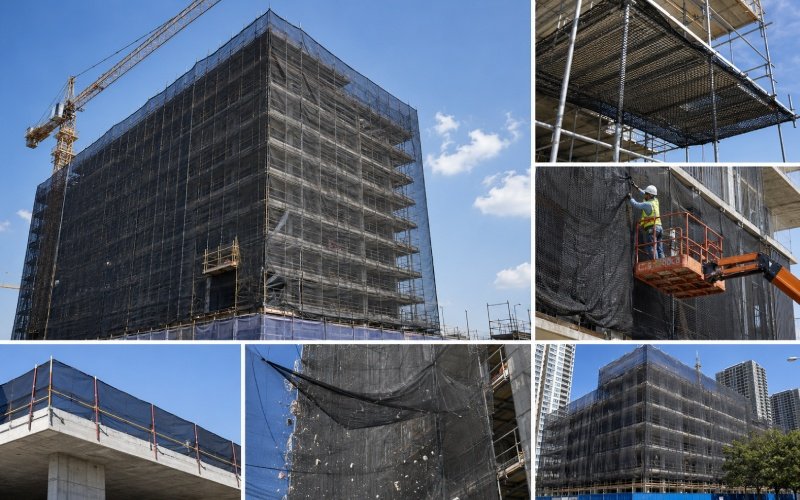
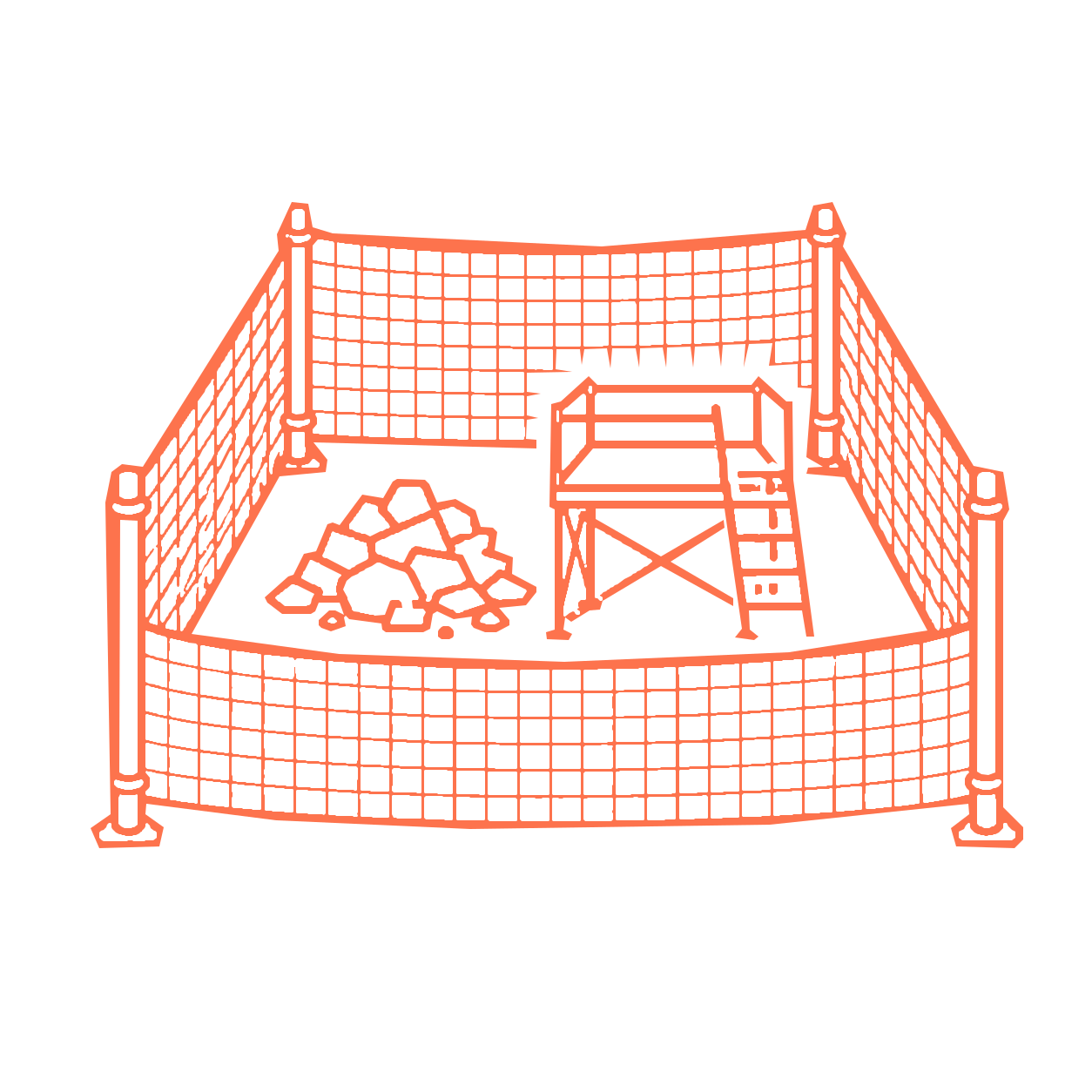
Debris netting is commonly used on scaffolding, temporary site enclosures, perimeter barriers, and work zones where containment and protective separation are needed.
Scaffold Coverage
Installed around scaffolding to reduce falling debris, dust, and site exposure.
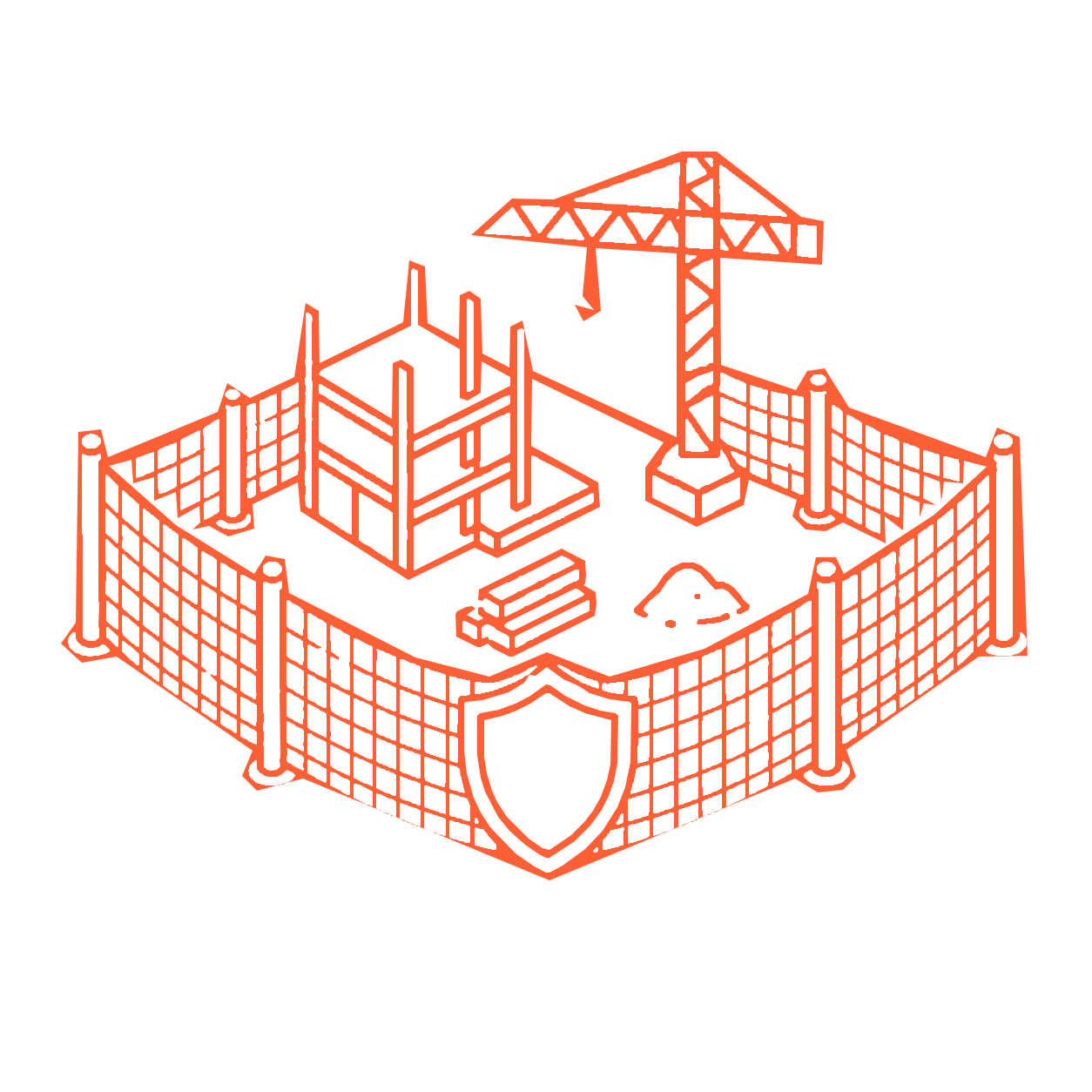
Site Enclosure
Used to surround construction areas for safety control, privacy, and debris containment.
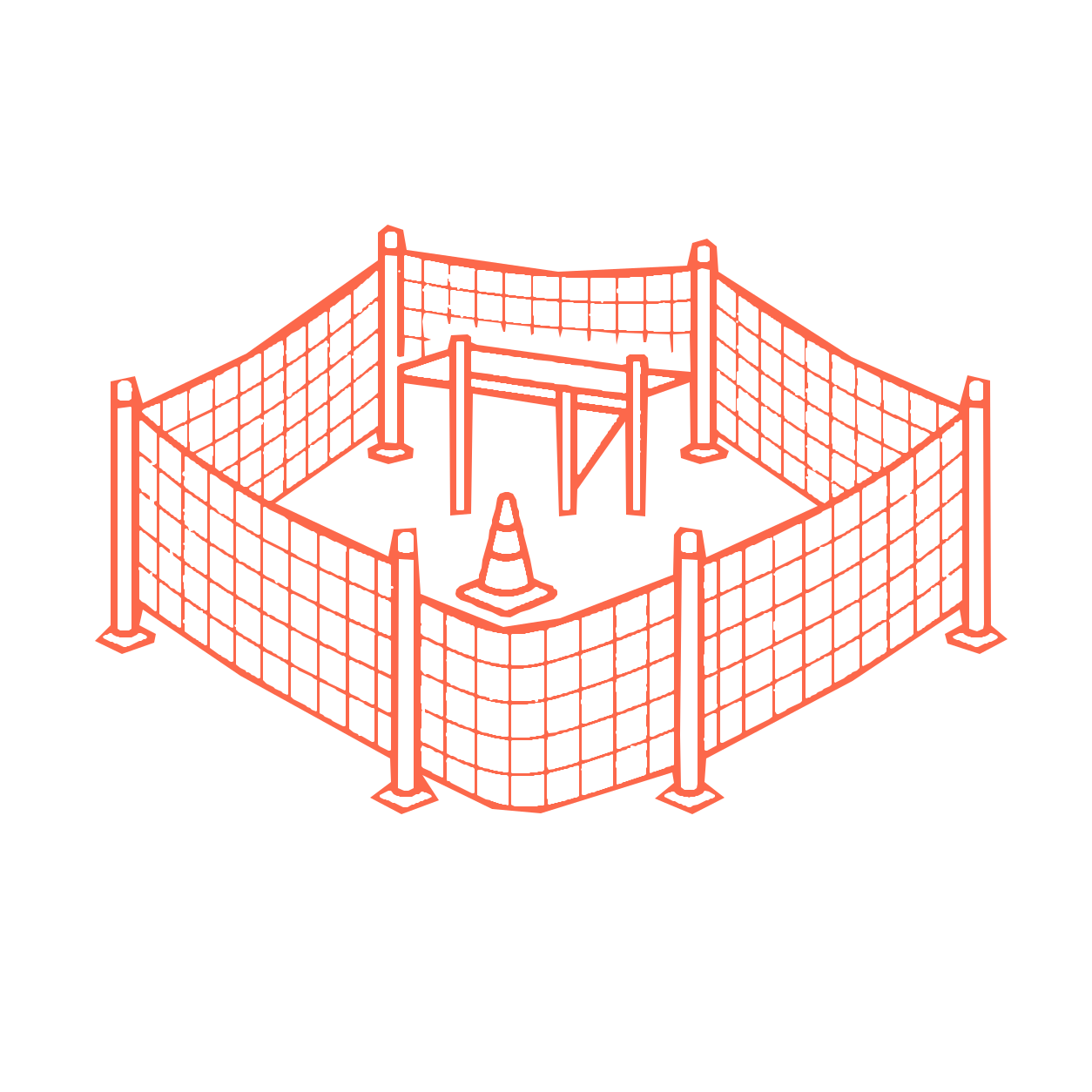
Work-Area
Keeps tools, debris, and materials within designated construction or maintenance zones.
Perimeter Protection
Placed around site boundaries to protect workers, pedestrians, and nearby property.
Recommended Product Options
Depending on the project, debris netting may be used for scaffold coverage, perimeter containment, or broader work-area separation and protection.
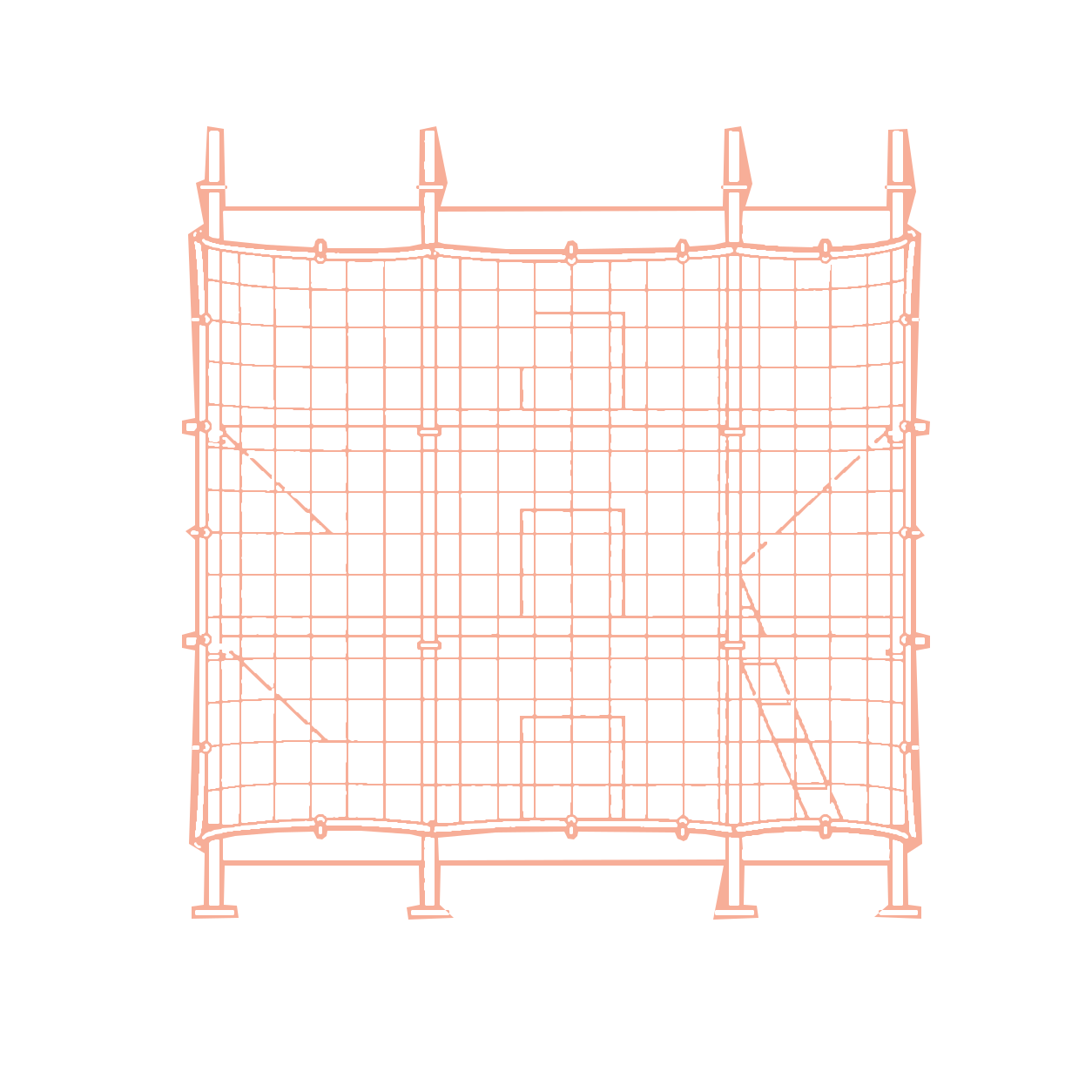
Scaffold Netting
Installed on scaffolds to contain debris, dust, and improve construction site safety.
Buyers usually need to confirm coverage dimensions, installation area, environmental exposure, reinforcement requirements, and attachment methods before choosing debris netting.
Product Type
Dimensions
Coverage Area
Exposure
Reinforcement
Attachment
Scaffold Net
3–25 m width, modular lengths as required
Attached to scaffold frames covering floors, walls, or open edges
Outdoor construction sites, exposed to wind and sun
Reinforced edges and UV-resistant mesh for structural integrity
Tied with ropes, clips, or clamps to scaffold tubes
Perimeter Net
5–20 m width, adaptable length per site layout
Perimeter of building sites, hazard zones, or open areas
Outdoor exposure; wind, sun, and dust resistant
Hemmed edges with double-stitched reinforcement for durability
Fixed with ground anchors, poles, ropes, or clips
Site Containment Net
Custom dimensions depending on building or site size
Full-site coverage or targeted zones for debris control
Exposed to construction site conditions, weather, and UV
Extra reinforcement at corners and edges; heavy-duty mesh
Secured with hooks, tie ropes, and scaffold or pole attachments
Material and Structure Guidance
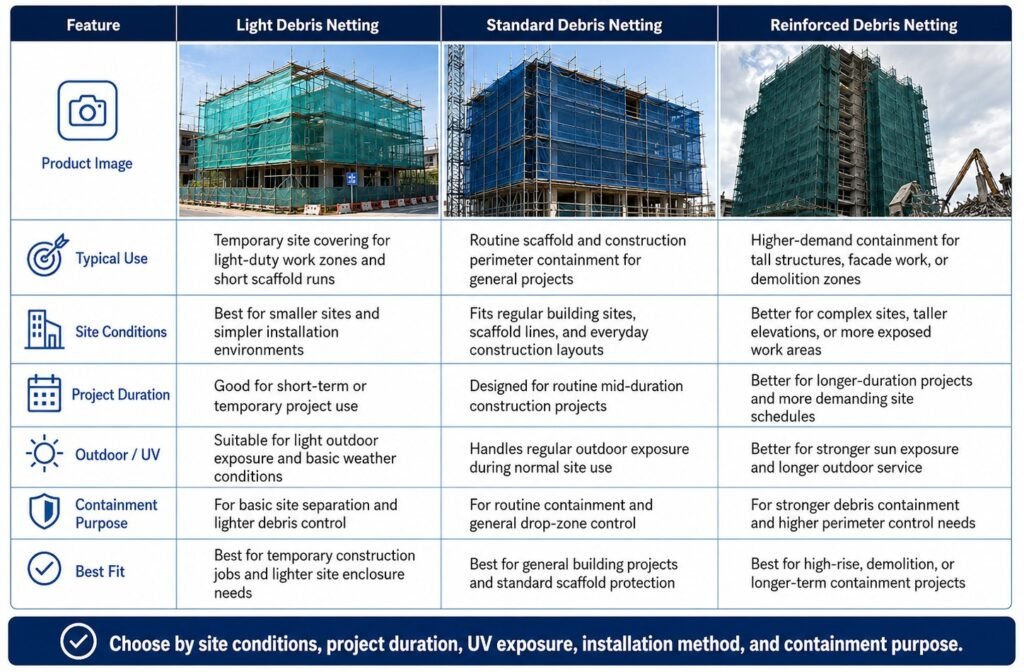
The most suitable debris netting depends on the site environment, project duration, installation method, and the level of containment needed
We support custom dimensions, mesh configurations, rope edging, reinforcement details, accessory coordination, packaging requirements, and selected OEM-related needs based on project specifications.
Find answers to common questions about debris netting dimensions, installation conditions, project suitability, and outdoor use.
1. How do I choose the right size for debris netting?
The right size depends on scaffold height, building perimeter, coverage area, and fixing points. B2B buyers should confirm the required roll width, roll length, overlap area, and whether the netting will be used for full façade coverage or partial protection.
2. What roll sizes are commonly available for debris netting?
Debris netting is often supplied in rolls for easy transport and installation. Common roll widths include 1 m, 2 m, 3 m, or custom widths, while roll length can be adjusted based on project needs. For large construction sites, longer rolls help reduce joints and installation time.
3. How is debris netting installed on scaffolding?
Debris netting is usually fixed to scaffold frames using cable ties, ropes, clips, or eyelets. The net should be securely tensioned and overlapped at joints to prevent gaps. For high-rise projects, reinforced edges and more fixing points are recommended.
4. Can debris netting be used outdoors for long construction periods?
Yes. Outdoor debris netting should be made from UV-stabilized and weather-resistant materials such as HDPE or PP. For long-term projects, buyers should check UV resistance, tensile strength, wind exposure, and expected service life before ordering.
5. How do I know if debris netting is suitable for my project?
Project suitability depends on building height, scaffold type, local wind conditions, debris size, site safety requirements, and installation method. Light-duty netting may be enough for dust and small debris, while heavy-duty netting is better for demanding construction environments.
6. What reinforcement options are available for debris netting?
Common reinforcement options include reinforced edges, buttonholes, eyelets, thicker border rope, double stitching, and stronger mesh density. These features help improve tear resistance and make the netting more stable during installation and outdoor use.
7. Can debris netting be customized for different construction sites?
Yes. Debris netting can be customized by roll size, mesh density, weight, color, UV treatment, fire-retardant treatment, logo printing, and edge reinforcement. Custom options are useful for contractors, distributors, and large infrastructure projects.
8. What should B2B buyers confirm before bulk ordering debris netting?
Buyers should confirm net size, roll dimensions, material, mesh density, weight, UV resistance, fire-retardant requirement, reinforcement method, installation accessories, packaging, quantity, and delivery schedule. For large projects, samples or technical datasheets are recommended before mass production.
Need Debris Netting for Scaffold or Site Containment Use?
Send us your site dimensions, coverage purpose, and quantity requirements for a more focused recommendation and quotation from China.