Windbreak Netting Supplier for Agricultural and Environmental Protection
Wenetting supplies windbreak netting for agricultural buyers, growers, and commercial farm applications where wind reduction, crop-area protection, and more controlled field conditions are important
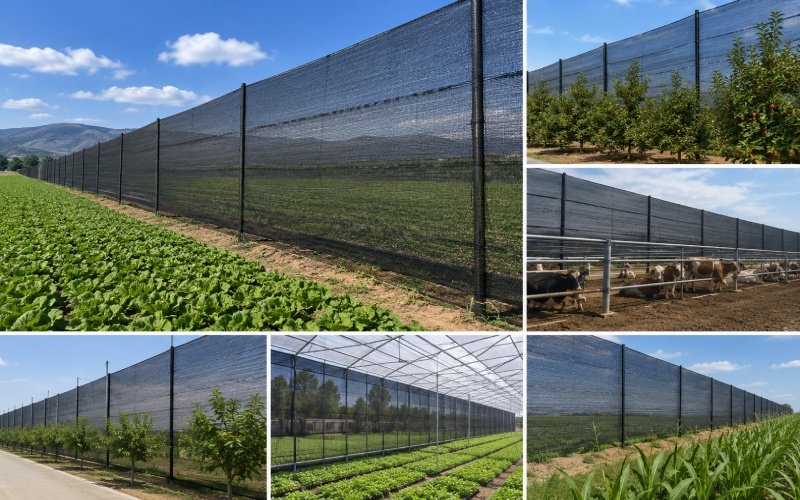
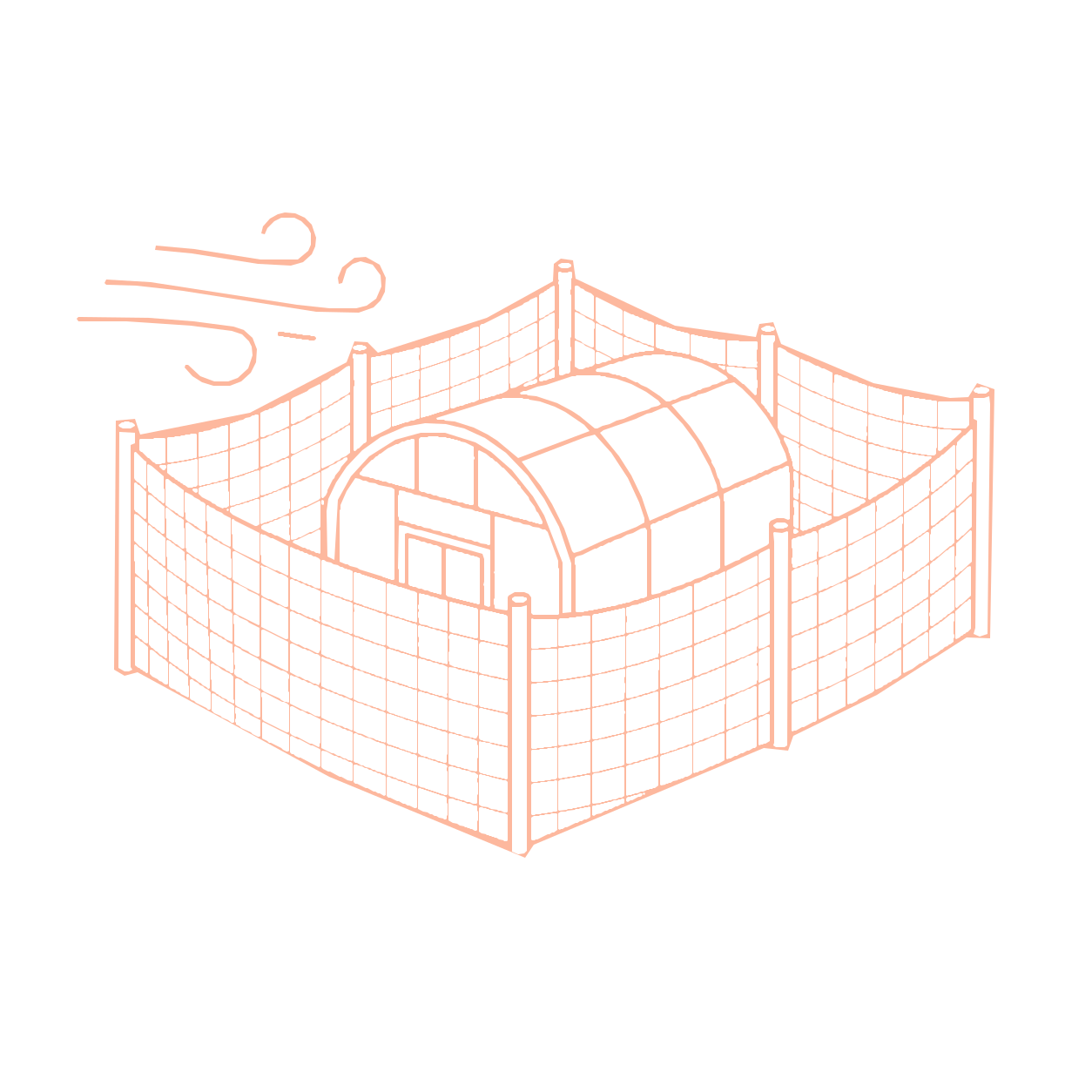
Windbreak netting is commonly used in fields, orchards, nurseries, greenhouse boundaries, and agricultural perimeter areas where reducing wind stress can help improve protection and growing conditions.
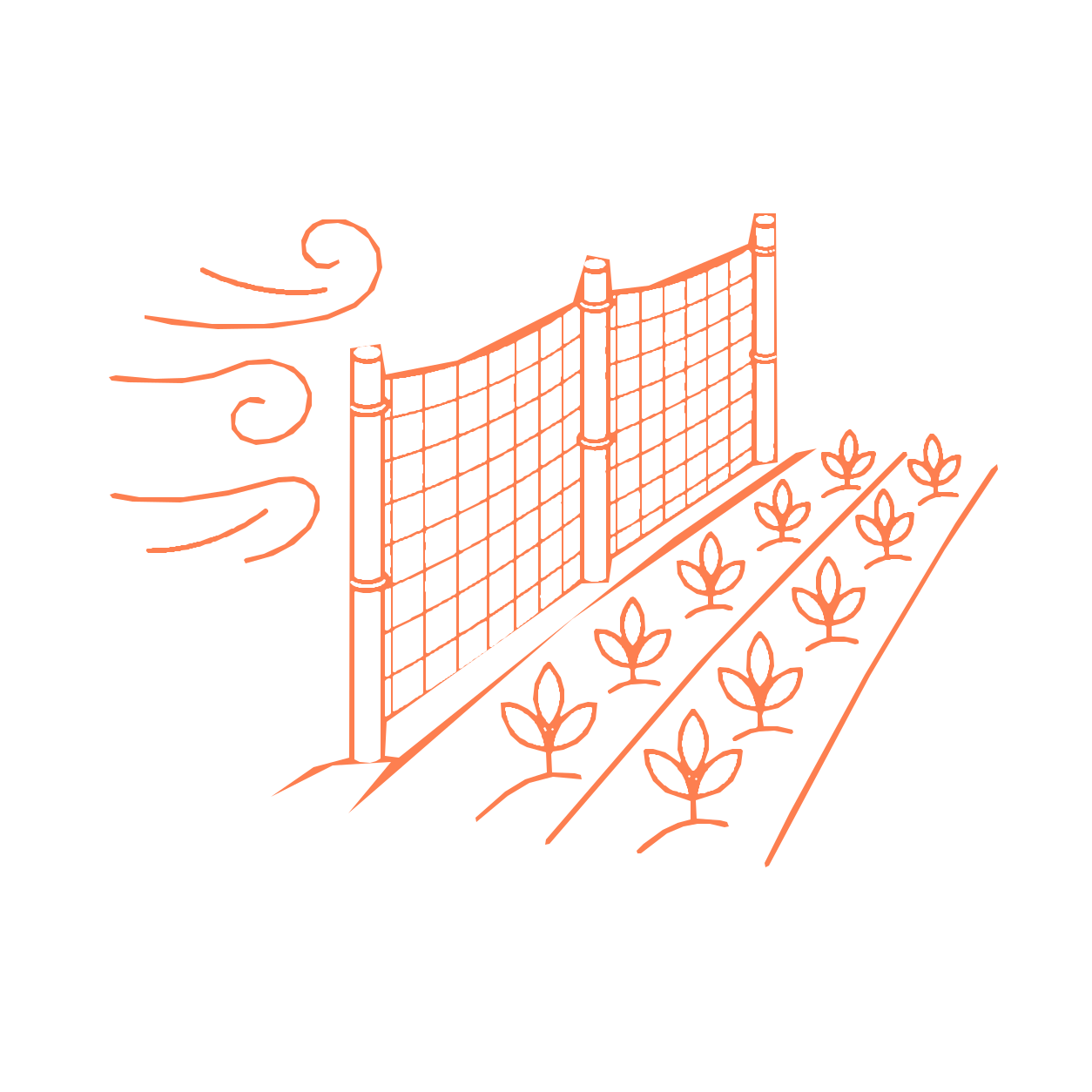
Farmland
Nets provide protection from birds, pests, and excessive sunlight across open crop fields.
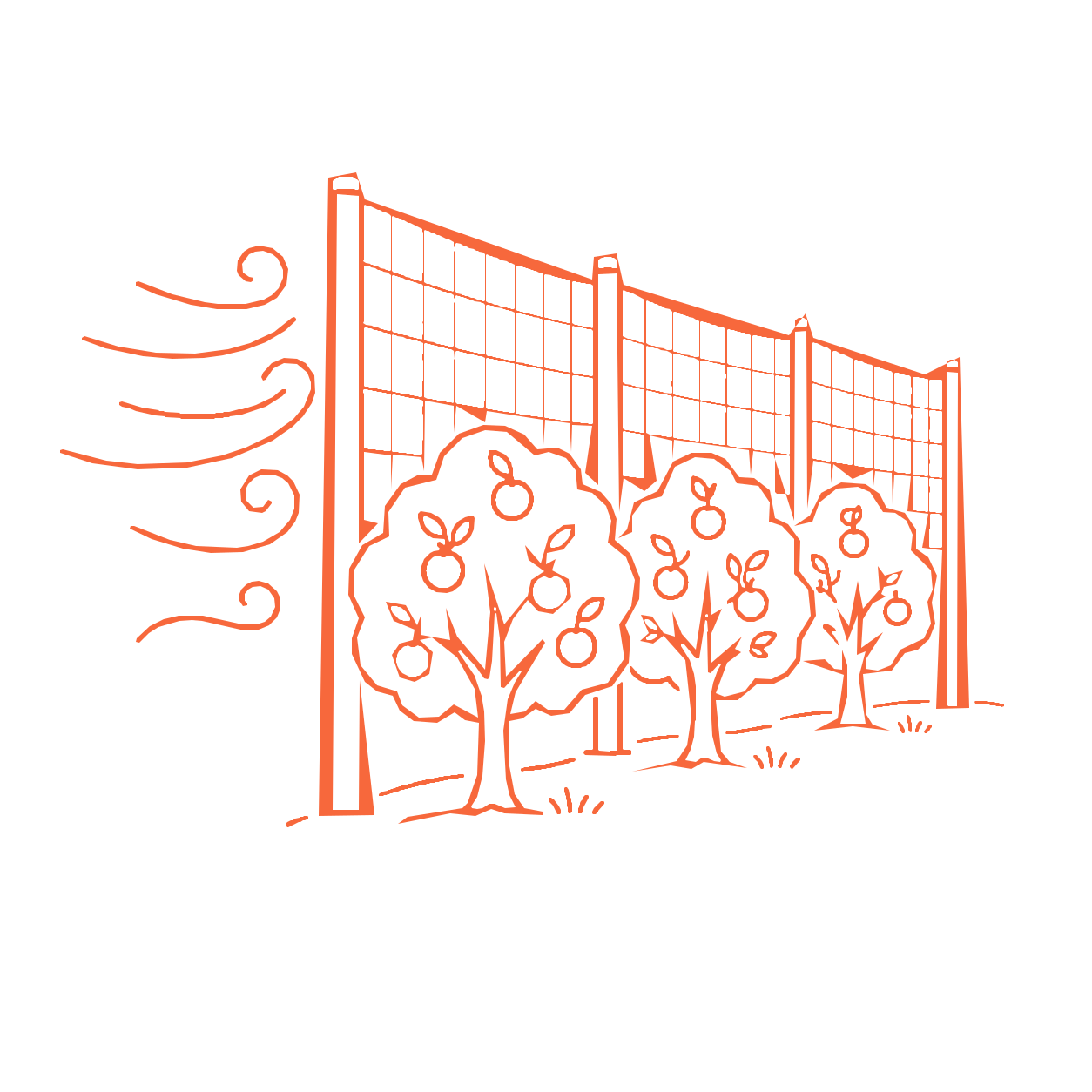
Orchards
Applied over or around trees to prevent bird damage, hail, and sun stress.
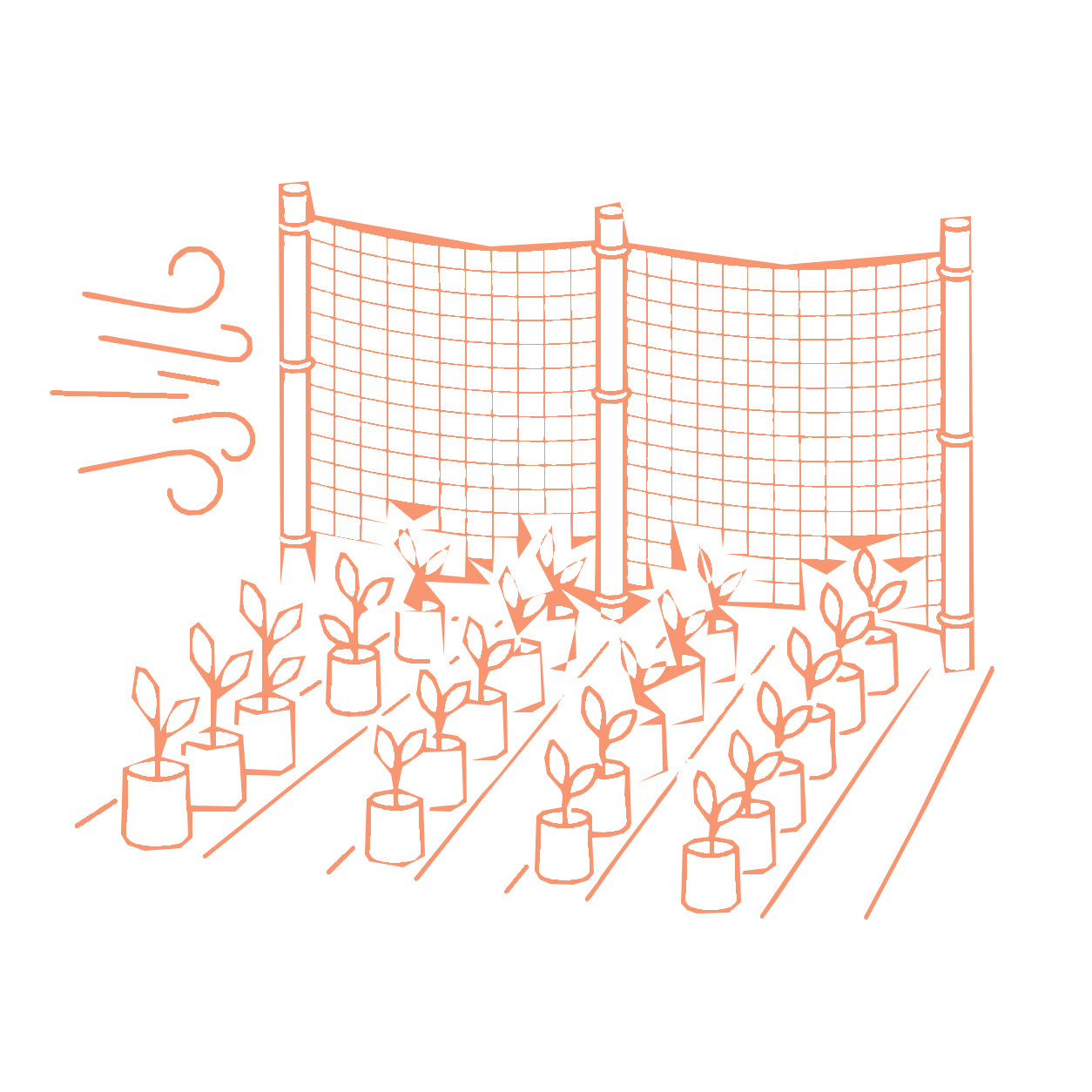
Nurseries
Protects seedlings and young plants from pests, birds, and environmental exposure.
Greenhouse
Surrounds greenhouses to provide protection from pests, birds, and external environmental factors.
Recommended Product Options
Depending on the site layout, windbreak netting may be used as boundary screening, crop-area wind protection, or broader agricultural barrier coverage.
Field Windbreak Net
Installed around crop fields to reduce wind speed and protect plants from damage.
Buyers usually need to confirm installation height, coverage length, density level, support structure, and environmental exposure before choosing windbreak netting.
Product
Height
Length
Density
UV
Installation Structure
Field Windbreak Net
Custom heights for open fields, crop rows, and planting zones
Supplied in long rolls or custom-cut sections for field coverage
Medium to high density to reduce wind speed while allowing airflow
UV-stabilized material for long-term outdoor agricultural use
Installed with posts, support wires, ropes, clips, or ground anchors
Boundary Screen
Available in different heights for farm boundaries and perimeter coverage
Flexible roll lengths for fencing lines, property edges, and exposed areas
Selected density based on privacy, wind control, and visibility needs
UV-treated structure helps resist sun damage and material aging
Fixed to fences, poles, frames, cables, or perimeter support systems
Agricultural Wind Barrier
Custom height options for orchards, nurseries, greenhouses, and crop fields
Long continuous rolls suitable for large-area wind reduction layouts
High-density mesh for stronger wind reduction in exposed farming areas
Outdoor-grade UV resistance supports repeated seasonal use
Supported by steel posts, wooden stakes, tension wires, ropes, or reinforced frames
Material and Structure Guidance
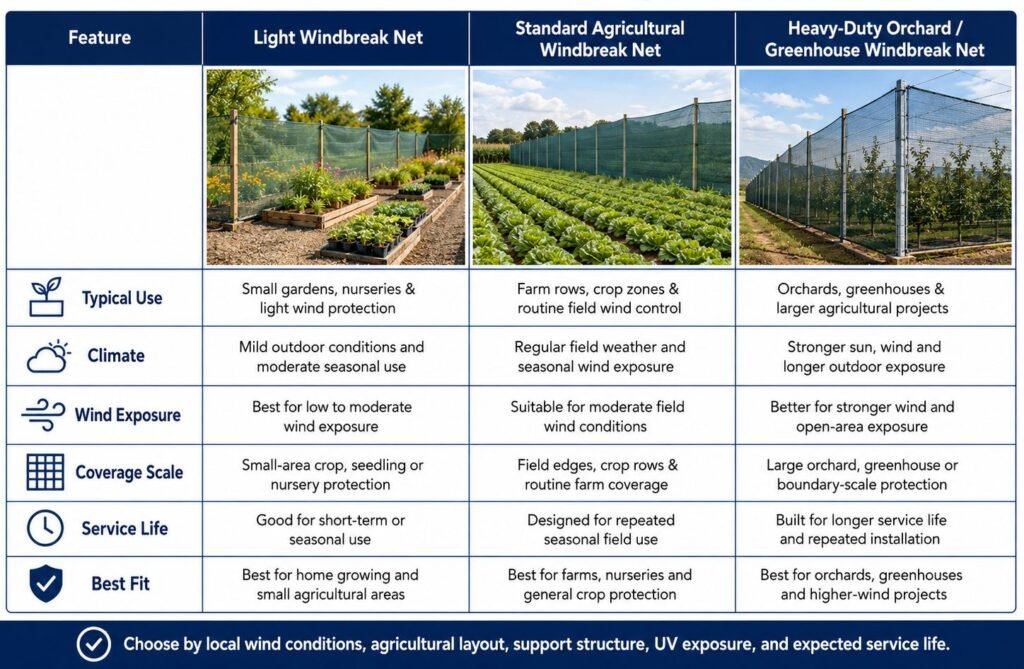
The most suitable windbreak netting depends on local wind conditions, agricultural layout, support structure, UV exposure, and how long the netting is expected to remain in service.
We support different dimensions, density preferences, color options, and packaging arrangements based on agricultural use requirements and buyer preferences.
Custom Dimensions
Mesh Size
Rope Edging
Netting Reinforcement
Accessories
Packaging
Related Product Options
Explore windbreak netting options commonly used for agricultural boundaries, crop protection, and field-environment management.
Find answers to common questions about windbreak height, density, outdoor durability, and agricultural installation methods.
1. How do I choose the right height for windbreak netting?
The right height depends on the area you need to protect, wind direction, crop height, and installation structure. For farms, orchards, nurseries, and greenhouse perimeters, buyers should confirm the protected zone width and local wind conditions before selecting the net height.
2. Can windbreak netting be customized by height and length?
Yes. Windbreak netting can be customized by height, roll length, density, color, edge reinforcement, and fixing method. Custom sizing is useful for large farms, long boundaries, orchards, and agricultural projects with non-standard layouts.
3. What density should I choose for windbreak netting?
Density affects wind reduction, airflow, and light transmission. Lower-density nets allow more airflow, while higher-density nets provide stronger wind reduction. B2B buyers should choose the density based on crop sensitivity, wind intensity, and whether full protection or partial airflow is needed.
4. Is higher density always better for wind protection?
Not always. Very high-density netting may block too much airflow and create strong pressure on posts or frames. A balanced density is often better because it reduces wind speed while allowing controlled airflow, helping protect crops and structures more evenly.
5. How long does windbreak netting last outdoors?
Outdoor service life depends on material, UV treatment, wind exposure, and installation quality. UV-stabilized HDPE or PP windbreak netting usually offers better durability under sunlight, rain, dust, and seasonal weather changes.
6. What installation methods are commonly used?
Windbreak netting is commonly installed with wooden posts, steel posts, cables, ropes, clips, eyelets, or tensioning systems. For long boundary installations, stable post spacing and proper tension are important to prevent sagging, tearing, or wind damage.
7. What should buyers consider for harsh outdoor environments?
Buyers should check UV resistance, tear strength, mesh density, edge reinforcement, post structure, wind load, and fixing accessories. In high-wind areas, reinforced edges and stronger support systems are recommended for longer service life.
8. What should B2B buyers confirm before bulk ordering windbreak netting?
Buyers should confirm height, roll length, density, material, UV resistance, color, edge reinforcement, installation method, post spacing, packaging, quantity, and delivery schedule. For large agricultural projects, samples or technical specifications are recommended before mass production.
Need Windbreak Netting for a Field or Agricultural Boundary ?
Send us your site dimensions, use environment, and protection goals for a more targeted recommendation and quotation.