Shade Netting Supplier from China for Agricultural Coverage and Light Control
Custom Shade Netting Supplier for Agricultural Installations, Farm Owners, and Project Buyers
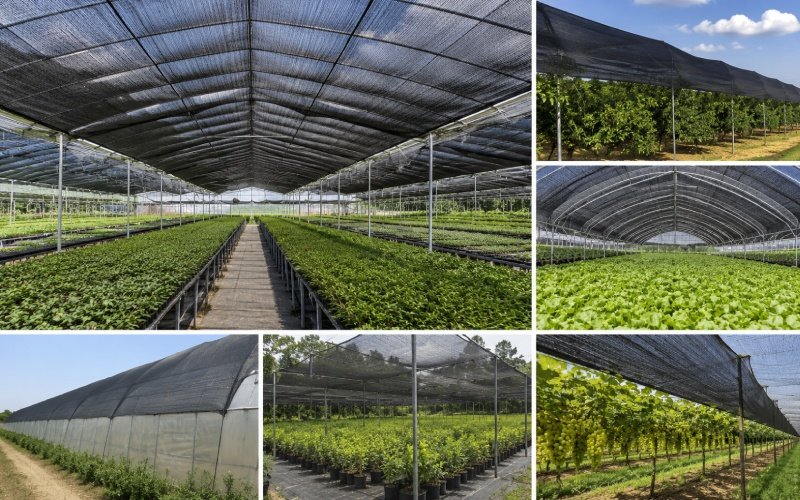
Wenetting supplies shade netting for greenhouses, nurseries, orchards, and agricultural growing environments where sun exposure, temperature control, and practical crop coverage need to be managed more effectively.
Shade netting is commonly used in greenhouses, nurseries, orchards, and agricultural growing environments where light control, heat reduction, and crop coverage management are important.
Greenhouse
Protective netting for temperature, sunlight, and pest control inside greenhouse environments.
Farm Coverage
Broad-area nets protecting fields from birds, pests, and harsh weather conditions.
Orchard
Covering trees to prevent bird damage, hail impact, and excessive sun exposure.
Crop Shading
Lightweight nets providing shade to reduce heat stress and improve crop growth.
Recommended Product Options
Depending on the installation environment, shade netting may be used for overhead crop coverage, greenhouse shading, nursery protection, or wider agricultural area management.
Shade Coverage Nets
Used for open fields, nurseries, and farms needing controlled sunlight and heat reduction.
Buyers usually need to confirm shade rate, coverage dimensions, UV exposure, installation structure, and intended growing conditions before choosing shade netting from a manufacturer or supplier.
Product Type
Shade Rate
Width
Length
UV
Installation Style
Greenhouse Shade Net
30%–90% shade rate available according to crop and climate needs
Custom widths for greenhouse roofs, sidewalls, and tunnel structures
Supplied in rolls or cut-to-size panels for greenhouse coverage
UV-stabilized material helps reduce aging under long-term sunlight exposure
Installed over greenhouse frames, roof systems, side curtains, or support wires
Agricultural Shade Cover
40%–95% shade rate for open-field, nursery, and crop protection use
Wide roll options for field rows, orchards, nurseries, and planting areas
Available in long rolls for large-area agricultural coverage
UV-treated woven structure supports outdoor farming and seasonal reuse
Fixed with poles, ropes, clips, ground anchors, hoops, or overhead support systems
Material and Structure Guidance
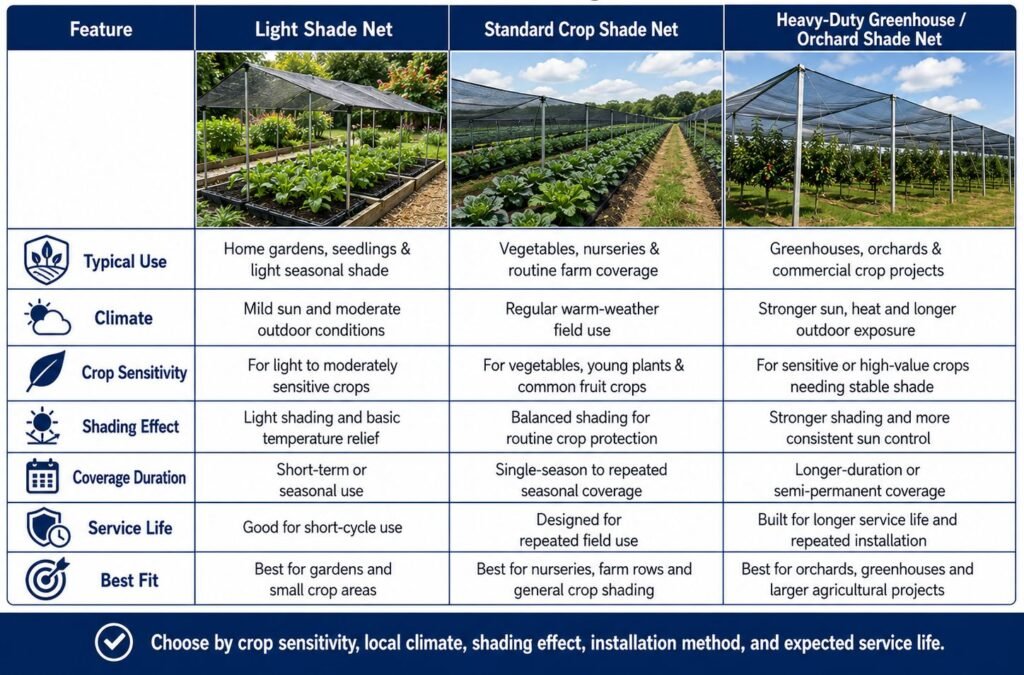
The most suitable shade netting depends on crop sensitivity, local climate, expected shading effect, installation method, and how long the netting will remain in use.
We support different shade rates, custom roll sizes, color options, packaging arrangements, and other requirements based on agricultural use and buyer preferences.
Custom Dimensions
Mesh Size
Rope Edging
Netting Reinforcement
Accessories
Packaging
Related Product Options
Explore shade netting options commonly used for greenhouses, crop protection, nursery coverage, and agricultural light management.
Find answers to common questions about shade rate selection, roll sizes, outdoor durability, and agricultural shading applications
1. How do I choose the right shade rate for my crops or facility?
Shade rate determines how much sunlight is filtered. Light-sensitive crops may require 30–50% shade, while sun-tolerant crops or livestock areas may need 50–70%. B2B buyers should select the shade rate based on plant type, growth stage, and local climate.
2. What is the typical service life of shade netting?
Service life depends on material quality, UV treatment, and environmental exposure. High-quality UV-stabilized polyethylene or polypropylene nets can last 3–6 years outdoors. B2B buyers should request UV resistance data to plan replacements and reduce downtime.
3. What roll sizes are available for shade netting?
Shade nets are commonly supplied in rolls ranging from 50 m to 200 m in length and 2–6 m in width. Longer rolls reduce the number of joins, save installation time, and ensure uniform coverage for large greenhouses or farms.
4. How do I ensure the shade netting fits my crops?
Netting should be selected based on crop height, spacing, and plant canopy density. B2B clients should provide greenhouse or field dimensions, crop types, and row spacing to ensure proper coverage without damaging plants.
5. Can shade netting be customized for specific sizing?
Yes. Netting can be cut to width and length, and edges can be reinforced with ropes, hems, or eyelets for secure installation. Custom sizing is recommended for large-scale farms, nurseries, or multi-block facilities.
6. Is shade netting suitable for outdoor use?
Yes. Outdoor netting should be UV-stabilized, weather-resistant, and durable against wind, rain, and dust. Reinforced borders and strong attachment points improve performance in harsh environments.
7. How do I know if the netting is suitable for my application?
Application fit depends on whether the net is used for greenhouses, nurseries, orchards, livestock shade, or general outdoor protection. Buyers should check weight, mesh size, color, and tensile strength for optimal coverage and durability.
8. What should B2B buyers confirm before bulk ordering?
Confirm shade rate, material type, roll length and width, reinforcement method, outdoor durability, crop type, and required coverage area. For large projects, request samples or technical specifications to ensure the netting meets performance and climate requirements.
Need Shade Netting for Greenhouse or Crop Coverage?
Send us your crop type, coverage dimensions, and shading requirements for a more targeted recommendation and quotation from China.