Dr. Liang Qi Ming is a distinguished authority in the field of industrial textiles and woven materials. With over twenty years of dedicated research in polymer science and textile engineering, he has been at the forefront of technological innovation and expanding the application boundaries of technical woven mesh. His writing excels at demystifying complex engineering principles while providing a global perspective on trends within the international trade landscape. We are delighted that Dr. Liang has recently joined our team as the Production Technology Advisor for Wenetting, where he will share his unparalleled industry insights.
Credentials & Affiliations:
Senior Fellow, International Braided Materials Association (IBMA)
Guest Editor, Journal of Advanced Industrial Textiles
Adjunct Professor, Faculty of Materials & Textiles, Zhejiang Sci-Tech University
Former Principal Expert, National R&D Center for Industrial Mesh
Production Technology Advisor, Wenetting
Contents
Add a header to begin generating the table of contents
The “#” symbol in “36#” and “42#” does not refer to a quantity, price point, or quality grade. It is a specific technical designation for the linear density of the twine used to construct the net. Understanding this difference is not a minor detail—it is fundamental to selecting a netting product that will perform safely and last as long as required for your specific application. Choosing the wrong twine size is the most common and costly specification error made by first-time buyers.
For procurement managers, sports facility directors, and agricultural professionals, the specification codes found on netting quotes—such as “36# HDPE Netting” or “42# Nylon Safety Net”—often create more confusion than clarity.
This analysis demystifies the “#” designation system, explaining its scientific basis in textile engineering and its profound practical implications.
The guide provides a comprehensive breakdown of the critical differences between 36# and 42# netting across four key dimensions: material science and tensile strength, durability and longevity under environmental stress, application suitability and performance characteristics, and total cost of ownership.
Through direct comparisons, practical case studies, and engineering data, this document serves as an essential reference for making informed specification decisions that balance performance requirements with budget constraints, ensuring that the selected netting system meets both immediate functional needs and long-term operational goals.
The “#” refers to “Denier” or “Tex,” not quality. It’s a measure of the twine’s thickness/material density (36# = lighter/less material; 42# = heavier/more material).
Strength increases with the number. A 42# twine has approximately 40-50% higher breaking strength than a 36# twine of the same polymer.
Durability is not linear. A 42# net will typically last 1.5 to 2 times longer than a 36# net in the same environment due to increased mass and abrasion resistance.
Weight and cost are direct trade-offs. 42# nets are 15-20% heavier and 25-40% more expensive per unit area than 36# nets.
Application dictates choice. Use 36# for light-duty, temporary, or low-impact uses. Specify 42# for all safety-critical, permanent, or high-wear installations.
Chapter 1: Decoding the “#” – The Science of Twine Specification
To understand the difference between 36# and 42#, we must first move away from the abstract symbol “#” and examine the concrete textile engineering standards it represents. This designation system originates from the global fishing and maritime industries, where net performance is literally a matter of life, death, and economic survival.
The Unit of Measure: Denier and Tex
The “#” is a shorthand, primarily in the North American market, for the linear density of the synthetic fiber or yarn. It is most accurately related to two official units(Tailors world):
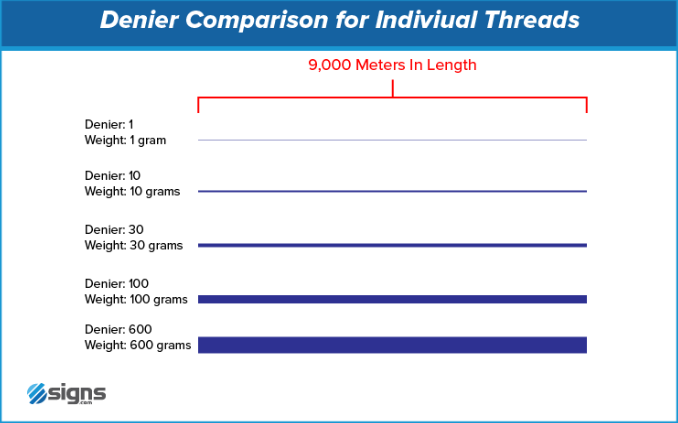
Denier (Den): Defined as the mass in grams of 9,000 meters of fiber. A higher denier means a thicker, heavier strand.
Tex: Defined as the mass in grams of 1,000 meters of fiber. It is a more modern metric unit.
The Practical Translation:
“36#” typically corresponds to a twine with a linear density of approximately 4,500 – 5,400 Denier.
“42#” typically corresponds to a twine with a linear density of approximately 6,300 – 7,200 Denier.
This is not a simple 6-unit difference. It represents a significant increase in the amount of polymer material extruded to form each continuous filament within the twine.
Construction: Twist, Ply, and Resultant Diameter
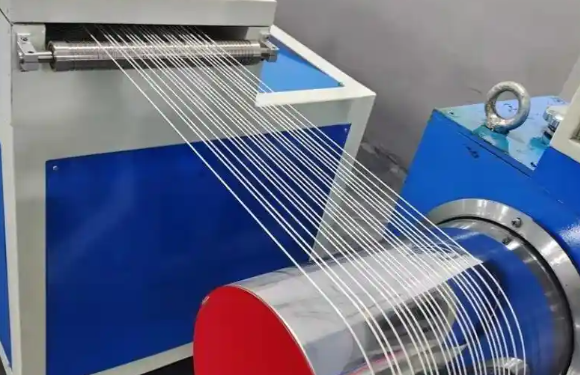
A netting twine is not a single monofilament. It is constructed by twisting together multiple finer filaments (yarns) to form a cohesive, strong cord.
A typical 36# twine might be constructed as: 3 Ply x 1,800 Denier. This means three yarns, each of 1,800 Denier, are twisted together. The final nominal diameter is approximately 2.4mm – 2.6mm.
A typical 42# twine might be constructed as: 3 Ply x 2,400 Denier or 4 Ply x 1,800 Denier. This results in a final nominal diameter of approximately 2.8mm – 3.0mm.
This increase in diameter—roughly 0.4mm—is visually perceptible and tangible to the touch. It is this additional material that drives all subsequent performance differences.
Chapter 2: The Strength Equation – A Direct 36# vs. 42# Comparison
The most critical performance metric for any netting is its breaking strength—the amount of force required to cause catastrophic failure. This is where the choice between 36# and 42# moves from theory to critical engineering.
When tested under controlled conditions (ASTM D5035 / ISO 2062), the difference in raw tensile strength is substantial. The following table provides typical minimum breaking strength values for new, virgin-grade HDPE twine.
Specification
Approx. Linear Density (Denier)
Nominal Diameter (mm)
Minimum Breaking Strength (lbf / kN)
Strength Increase vs. 36#
36# HDPE Twine
5,400 Den
2.5 mm
450 lbf / 2.0 kN
Baseline
42# HDPE Twine
7,200 Den
2.9 mm
630 lbf / 2.8 kN
+40%
Key Insight: The strength increase (~40%) is slightly less than the material increase (~33%, from 5,400D to 7,200D). This is due to manufacturing efficiencies and the physics of load distribution across the twisted ply structure. Nevertheless, a 40% strength margin is transformative for application safety.
Knot Strength and Mesh Retention
A net is only as strong as its weakest point, which is often the knot (in knotted nets) or the connection points in knotless constructions. Thicker twine dramatically improves performance here.
Knot Strength: The knot effectively weakens a twine by creating complex stress points. A high-quality knot in a 36# net may retain 70-80% of the twine’s straight-line strength. A knot in a 42# net, due to the larger diameter providing more friction and contact area, can retain 75-85% of its strength. This means the actual working strength of a knotted mesh favors the 42# net even more significantly.
Mesh Retention: This is the force required to push an object (like a baseball or piece of debris) through a mesh opening, causing the twines to spread and fail. The stiffer, thicker 42# twine resists this deformation far better than 36#. This is crucial for safety netting, where containing a falling object or person is the primary function.
A municipal park purchased a 36# polyethylene backstop net for its Babe Ruth field (70ft base paths). During a game, a line-drive foul ball struck the net with an estimated force of 550 lbf. The netting at the point of impact ruptured, the ball passed through, and narrowly missed spectators. Post-failure analysis concluded that while the net was rated for “baseball,” the 36# specification was a light-duty practice net specification, not suitable for the high-impact forces of competitive teenage play. A 42# nylon or HDPE net, with a minimum mesh retention strength exceeding 700 lbf, would have contained the ball safely.
Our Baseball Barrier Nets provide a durable and safe solution for your field. Made from high-quality polyester or PP with a knotless design, they effectively contain balls and protect surroundings. Choose from white or black to enhance visibility and field aesthetics, ensuring long-lasting performance for 2-5 years outdoors.
Durability is not merely about withstanding a single massive force; it is about resisting the cumulative, degrading effects of the environment over years of service. Here, the additional mass of 42# twine provides exponential benefits.
Abrasion Resistance: The Battle Against Friction
Abrasion is the gradual wearing away of the twine surface through repeated friction. This occurs when nets rub against support poles, cables, or even themselves in the wind.
Surface Area and Wear Depth: A 42# twine has a larger cross-sectional area. For an abrasive force to wear through 50% of the twine’s diameter, it must remove significantly more material than from a 36# twine. In practical terms, if a 36# net shows critical wear after 3 years of rubbing against a galvanized pole, a 42# net in the same spot might show only superficial wear.
Material Loss Impact: Losing 0.5mm of diameter from a 2.5mm 36# twine represents a 20% loss of cross-section, severely compromising strength. Losing 0.5mm from a 2.9mm 42# twine represents only a 17% loss, and the remaining core is still as thick as a new 36# twine.
Ultraviolet radiation from the sun breaks down the polymer chains on the surface of the twine. This process, called photo-oxidation, creates a brittle outer shell that cracks and erodes.
The “Sacrificial Layer” Effect: All UV-stabilized netting degrades from the outside in. A 42# twine has more bulk material behind the degrading surface layer. It can lose 0.3mm to UV embrittlement and erosion while still retaining a robust, fully functional core. A 36# twine, after losing the same 0.3mm, is left with a critically thin and weak remaining strand.
Lifespan Projection: Accelerated weathering tests (ASTM G154) show that under identical UV exposure, the time for a twine to lose 50% of its original tensile strength is approximately 60-100% longer for 42# vs. 36#. In a real-world, sunny climate, this can translate to a 36# net lasting 4-5 years before becoming unsafe, while a 42# net lasts 7-9 years.
Environmental Stress Crack Resistance (ESCR)
For HDPE in particular, ESCR is a key metric—its ability to resist cracking under sustained tension in the presence of environmental agents (detergents, pesticides, ozone). Thicker twine has a more homogeneous internal structure with fewer stress concentration points, giving 42# HDPE superior ESCR performance in agricultural or industrial washing scenarios.
Chapter 4: Application-Specific Decision Making
With the technical differences established, the crucial question becomes: Which one should I use for my project? The following decision matrix provides clear guidance across common sectors.
Sports & Recreation Netting
Application
Recommended #
Rationale & Technical Justification
Golf Driving Range Barrier (Primary)
42# Minimum
Must withstand cumulative impact of thousands of balls and high wind loads. 42# provides the necessary mass for ball deadening and structural integrity over long spans.
Golf Practice Cage (Residential)
36#
Lower ball speed, smaller size, and shorter lifespan expectations make 36# a cost-effective choice for casual use.
Baseball/Softball Backstop (Competitive)
42# (HDPE) or 36# (Nylon)
For high-impact, 42# HDPE or stronger 36# Nylon (which has higher inherent tenacity) is required for safety. Nylon’s elasticity makes a lighter # viable for impact absorption.
Batting Cage Sides & Top
36#
Lower direct impact frequency compared to the backstop. 36# offers a good balance of protection and light weight for easier installation.
Tennis Court Windscreen
36# or 42#
36# is standard for visual screening and light wind reduction. Specify 42# for permanent, tensioned installations or in consistently high-wind areas to prevent tearing.
Soccer/Hockey Goal Nets
36#
Focus is on lightweight, minimal interference with play, and containing low-to-medium velocity projectiles. 36# is the industry standard.
Agricultural & Industrial Netting
Application
Recommended #
Rationale & Technical Justification
Bird Netting (Seasonal, 1-2 year use)
36#
Lightweight for easy deployment/removal. Long-term UV resistance is less critical.
Bird Netting (Permanent, Multi-year)
42#
The additional UV stabilizer mass and abrasion resistance against branches are critical for a multi-season ROI.
Debris Netting (Construction)
36#
Function is to catch lightweight dust and debris. It’s often considered a semi-disposable product replaced per project.
Cargo Netting (Trucking/Warehouse)
42#
Safety-critical. Must secure heavy, shifting loads without stretching or failing. The higher strength and abrasion resistance of 42# are non-negotiable.
Shade Cloth (30-70% Density)
As per fabric weight
“#” is less relevant; focus on gram-per-square-meter (GSM) and UV treatment. Heavier GSM correlates with durability.
For applications not clearly listed, ask these questions:
Is it Safety-Critical? (Could failure cause injury or major property damage?) → YES = 42#.
Is it a Permanent Installation? (>5 years intended lifespan) → YES = 42#.
Will it be under constant tension or high wind load? → YES = 42#.
Is it a temporary, low-impact, or budget-driven project? → YES = 36# may be suitable.
Chapter 5: The Total Cost of Ownership Analysis
The initial price per square foot of netting is only one part of the financial story. A true business decision requires a Total Cost of Ownership (TCO) analysis over the asset’s useful life.
Upfront Cost Comparison
Assume a market price for UV-stabilized HDPE knotted netting:
Let’s model a 10,000 sq ft golf range barrier over a 10-year period.
Cost Factor
36# HDPE Netting Scenario
42# HDPE Netting Scenario
Initial Purchase & Install
$22,000
$31,000
Replacement Cycle
Every 5 years
Every 8 years
Replacement Cost (Year 5)
$22,000
$0
Replacement Cost (Year 8)
N/A
$31,000 (Optional: may last to year 10)
Total Material Cost (10 yrs)
$44,000
$31,000 – $62,000
Total Installation Labor (2x vs 1x)
$6,000
$3,000
Risk Cost (Failure/Injury)
Higher Probability
Lower Probability
10-Year TCO
~$50,000
~$34,000 – $65,000
Analysis: Even in the worst-case where the 42# net is replaced in year 8, the 10-year TCO is comparable ($65k vs $50k), but you’ve had the benefit of a stronger, safer net for 8 years instead of a weaker one for 5. In the best case, a single 42# net lasts the full 10 years, halving the TCO and eliminating the disruption of a mid-life replacement project. The 42# net is the lower-risk, higher-value financial decision for a permanent asset.
Weight, Shipping, and Handling Implications
Weight: 42# netting is 15-20% heavier than 36#. This increases shipping costs slightly and may require consideration for support structures (e.g., slightly heavier-duty poles).
Handling: The thicker, stiffer 42# net can be slightly less pliable during installation, requiring a more experienced crew. However, its strength also makes it less prone to snagging and tearing during the install process.
Frequently Asked Questions (FAQ)
Can I mix 36# and 42# in the same net? No. This creates severe stress concentrations. The weaker 36# sections will become failure points, compromising the entire net’s rated strength and creating a major liability.
Is 42# always better than 36#? Not categorically. “Better” is defined by the application. For a temporary garden cover or a lightweight indoor divider, 42# is over-engineered, unnecessarily expensive, and harder to handle. 36# is the correct, optimized choice for light-duty work.
How does polymer type interact with the # rating? The polymer is the material, the # is the amount of that material. A 36# Nylon net will be stronger than a 42# HDPE net in terms of tensile and impact strength, because nylon has higher tenacity. However, the 42# HDPE will likely have better UV resistance. You must evaluate both variables: Material (chemistry) AND Mass (#).
My supplier offers “40#” or “38#” netting. What does this mean? This indicates a twine with a linear density between 36# and 42#. It is a less common but valid specification. Request the exact denier/tex or minimum breaking strength data to compare it accurately against standard sizes.
How can I verify the # specification of the netting I receive?
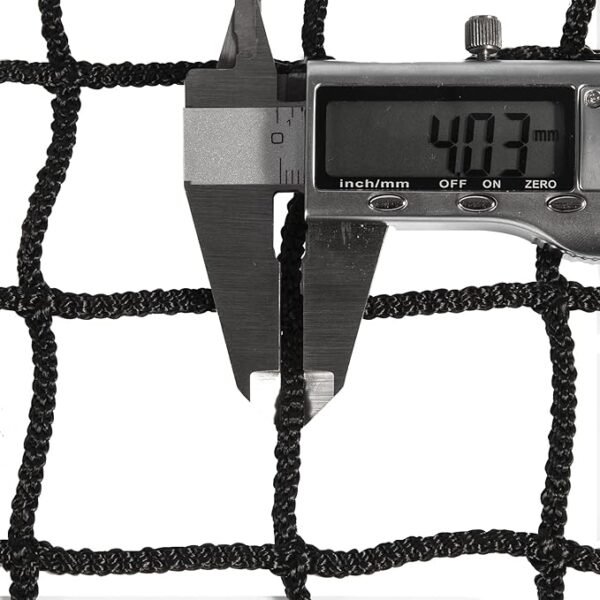
Measure Twine Diameter: Use a digital caliper. 36# ≈ 2.4-2.6mm, 42# ≈ 2.8-3.0mm.
Request a Test Report: A legitimate manufacturer can provide a third-party lab report stating the linear density (in Tex or Denier) and breaking strength of the twine used.
Weight Sample: Cut a known length (e.g., 1 meter) of twine from the net and weigh it. Compare to known weight charts for 36# and 42#.
The distinction between 36# and 42# netting is a fundamental engineering decision with cascading implications for safety, performance, durability, and total project cost. It is a classic specification choice that pits short-term budget sensitivity against long-term value and risk mitigation.
36# netting serves an important and valid role in the market: it is the efficient, economical solution for applications where the performance demands are moderate, the environment is not excessively punishing, and the intended service life is shorter. It is the correct choice for cost optimization when the technical requirements allow.
42# netting, however, represents the professional-grade standard for any installation where failure is not an option. The additional material provides a non-linear return on investment through dramatically increased strength, a longer service life that defers replacement costs, and the intrinsic safety margin that protects against unforeseen loads. For permanent sports facilities, safety-critical containment, and any asset where downtime is expensive, the specification of 42# netting is not an extravagance—it is evidence of prudent engineering and responsible asset management.
When evaluating your next netting project, move beyond the initial price quote. Specify by number, understand the material, and calculate the total cost of ownership. By doing so, you will ensure that the netting you install is not just a commodity, but a reliably performing component of your infrastructure for years to come.
Wenetting has over 20 years of experience in custom netting. Find out why Fortune 500 company and startup from more than 70+ countries trust wenetting to bring custom netting solutions to their company, connect with sales managers to communicate and collaborate with you.
E-mail: info@sunovix.com.
Phone: +8618205620930.
Address: Dong Liu Road, Hefei, Anhui Province China.