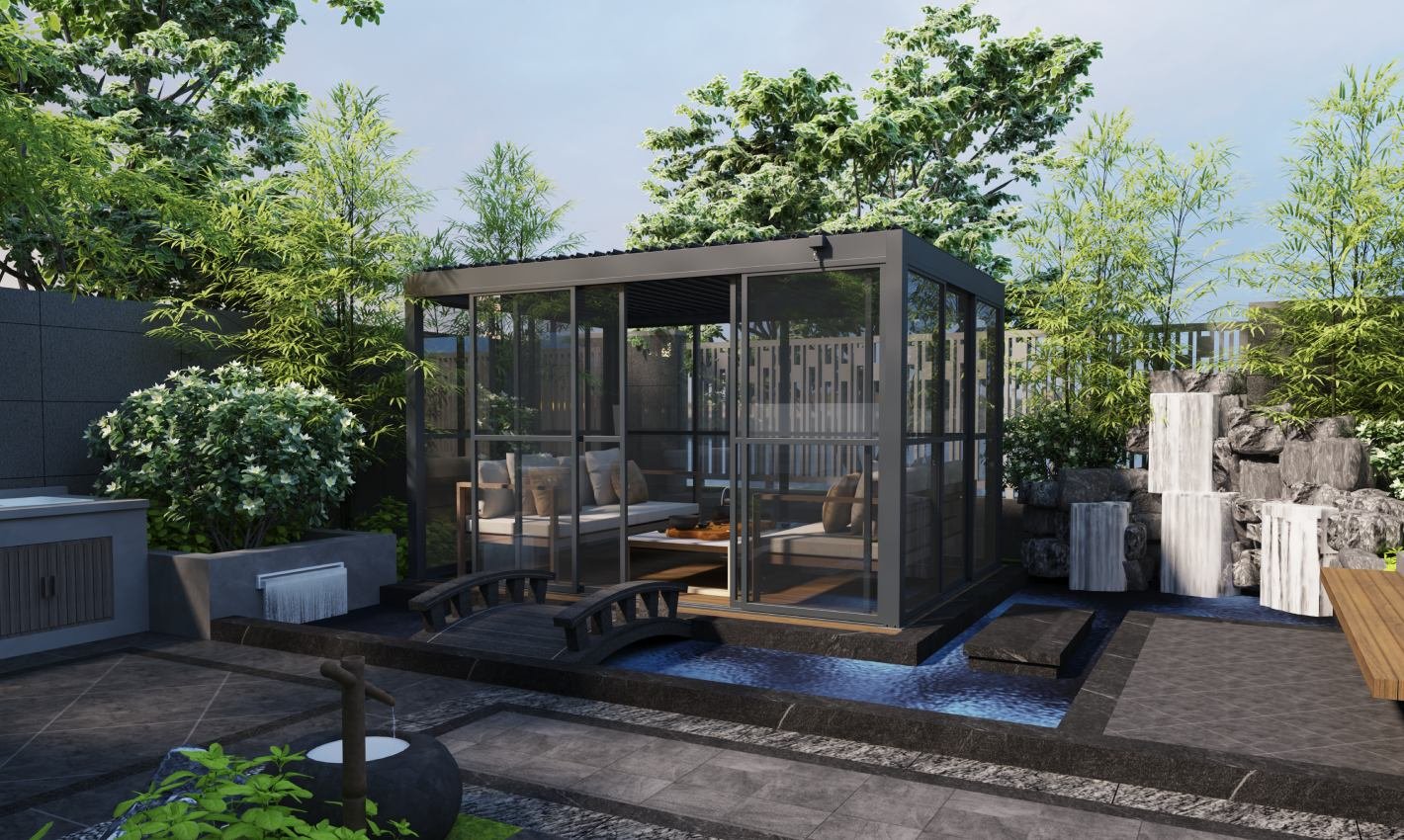
In the contemporary trend of pursuing high-quality outdoor living, pergolas have evolved from traditional fixed shade structures into highly intelligent, adjustable outdoor living solutions. With global warming intensifying and the demand for outdoor lifestyles growing, pergolas with adjustable shade features are becoming central elements in courtyards, patios, and commercial outdoor spaces. This article provides a comprehensive exploration of the technological innovations, design philosophies, material science breakthroughs, expanded application scenarios, and future trends of modern pergola systems. It analyzes how this product, through the perfect integration of engineering innovation and aesthetic design, meets the diverse needs of private residences and commercial spaces while adapting to varying climatic conditions.
The Rise of Adjustable Shade Pergolas: Background and Technological Evolution
The history of pergolas as architectural extensions dates back to ancient Egypt and Rome, but it is only in the last decade that this traditional outdoor shelter system has undergone a true technological revolution. According to a 2024 report by the China Shading Industry Association, the global market for adjustable shade pergolas is growing at an annual rate of 15%, driven primarily by rising consumer expectations for outdoor living comfort and the need to address extreme weather. Amid climate change, the prolonged duration of summer heatwaves has rendered traditional fixed shade structures inadequate for all-season outdoor activities, giving rise to adjustable shade systems that have rapidly developed.
The technological evolution of modern adjustable shade pergolas is marked by advancements in three key areas:
- Precision in Mechanical Structures: From early simple fixed louvers to today’s precisely adjustable aluminum louver systems with opening accuracy down to 1 degree, these designs block intense sunlight while ensuring free air circulation, creating an ideal microclimate. Research from the Technical University of Munich indicates that optimized adjustable louvers can reduce surrounding temperatures by 8-12°C, significantly enhancing thermal comfort in outdoor spaces.
- Intelligent Power Systems: Progress in motor technology has enabled the smooth operation of large shade structures. Modern pergolas commonly use brushless DC motors with noise levels below 40 decibels and thrust up to 5000N, capable of driving shade canopies over 20 square meters. These motors typically feature overload protection and self-locking functions, ensuring structural safety during high winds.
- Diverse Control Methods: Control interfaces have evolved from basic wall switches to comprehensive solutions including smartphone apps, voice commands, light and heat sensors for automatic adjustment, and integration with smart home systems. At the 2024 China Smart Home Expo, several pergola products were showcased, capable of autonomously adjusting shade based on parameters like UV intensity, rainfall probability, and wind speed.
Table: Technological Evolution of Adjustable Shade Pergolas
| Period | Mechanical Structure | Power System | Control Method | Typical Application |
|---|---|---|---|---|
| 2000-2010 | Fixed-angle fabric canopies | Manual/simple electric | Wall switch | Residential patios |
| 2011-2018 | Retractable fabric canopies | AC motor | Remote control | Outdoor café areas |
| 2019-2022 | Adjustable-angle louvers | Brushless DC motor | Smartphone app | Villa courtyards |
| 2023-Present | Smart louver systems | Multi-motor synchronization | Smart home integration | Commercial complexes |
This technological evolution is not occurring in isolation but aligns with the broader trend of intelligence in the outdoor furniture industry. As noted in the China Electric Retractable Awnings and Pergolas Industry Report by Beijing Boyan Consulting, modern pergolas have transitioned from mere shade facilities into “outdoor living regulation platforms,” with their functional boundaries expanding to include shade, lighting, audio, and environmental monitoring. This shift reflects an urgent need to maximize the utility and comfort of outdoor spaces—scarce resources amid rapid urbanization—making it a central theme in contemporary pergola design.
Engineering Innovation: Core Technologies of Adjustable Shade Systems
The rapid market penetration of modern adjustable shade pergolas owes much to a series of engineering innovations. These breakthroughs address the inherent limitations of traditional shade structures while delivering an unprecedented user experience. A deep dive into these core technologies reveals the competitive edge and design philosophy of today’s high-end pergola products.
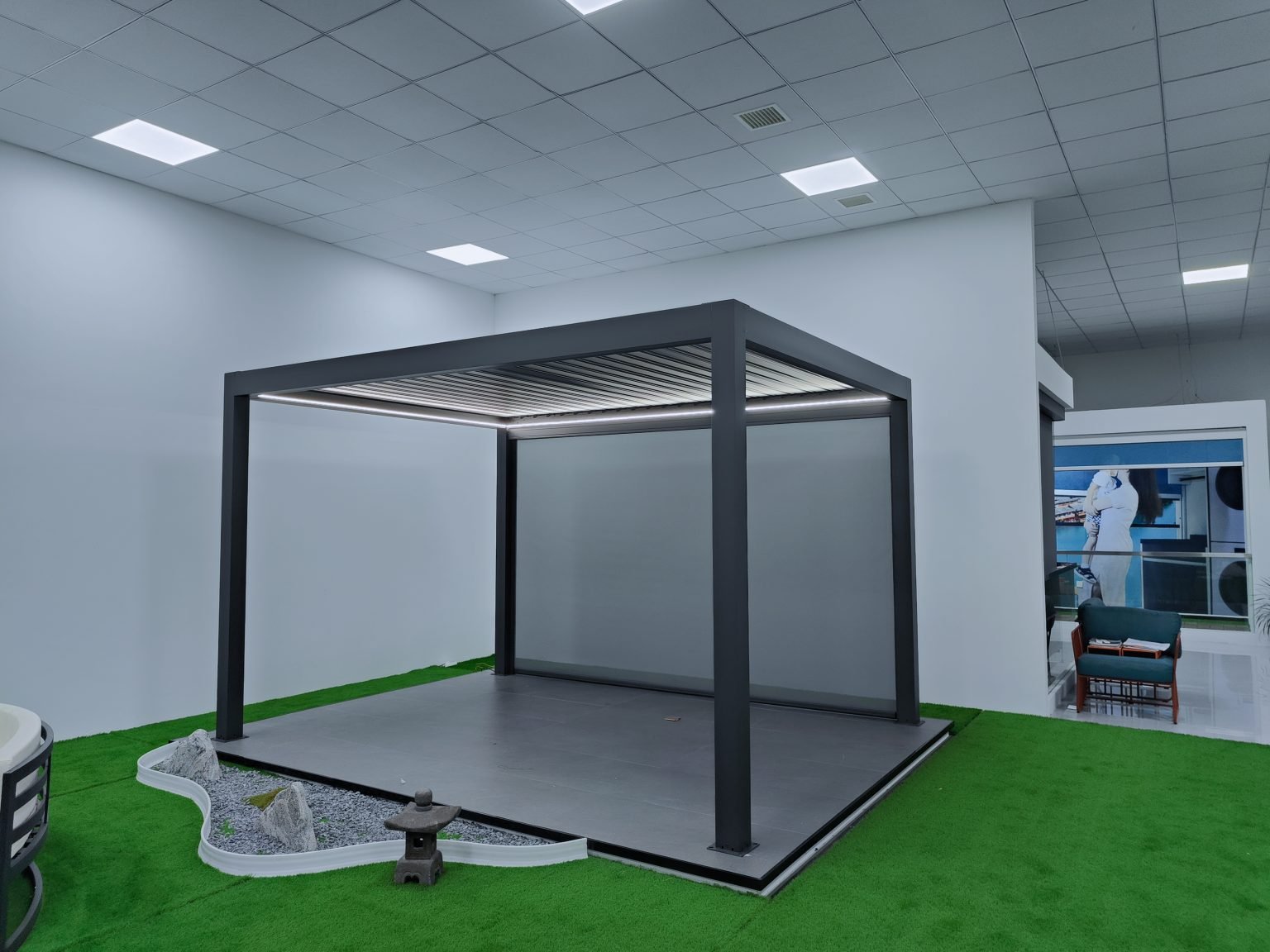
The smart louver roof system represents the pinnacle of adjustable shade technology. Unlike simple retractable fabric canopies, this system comprises high-strength aluminum blades, each adjustable from 0 to 150 degrees for precise control over sunlight, ventilation, and visibility. The rotation is driven by concealed linkage mechanisms, ensuring quiet and smooth operation, even across large areas. The patented louver system from Germany’s Outmos company even features an “auto-wind-avoidance” function—when wind speed sensors detect strong winds, the louvers adjust to an aerodynamically optimal angle, reducing wind resistance and enhancing structural safety. This intelligent responsiveness transforms pergolas from passive shelters into “smart architectural skins” that actively adapt to environmental changes.
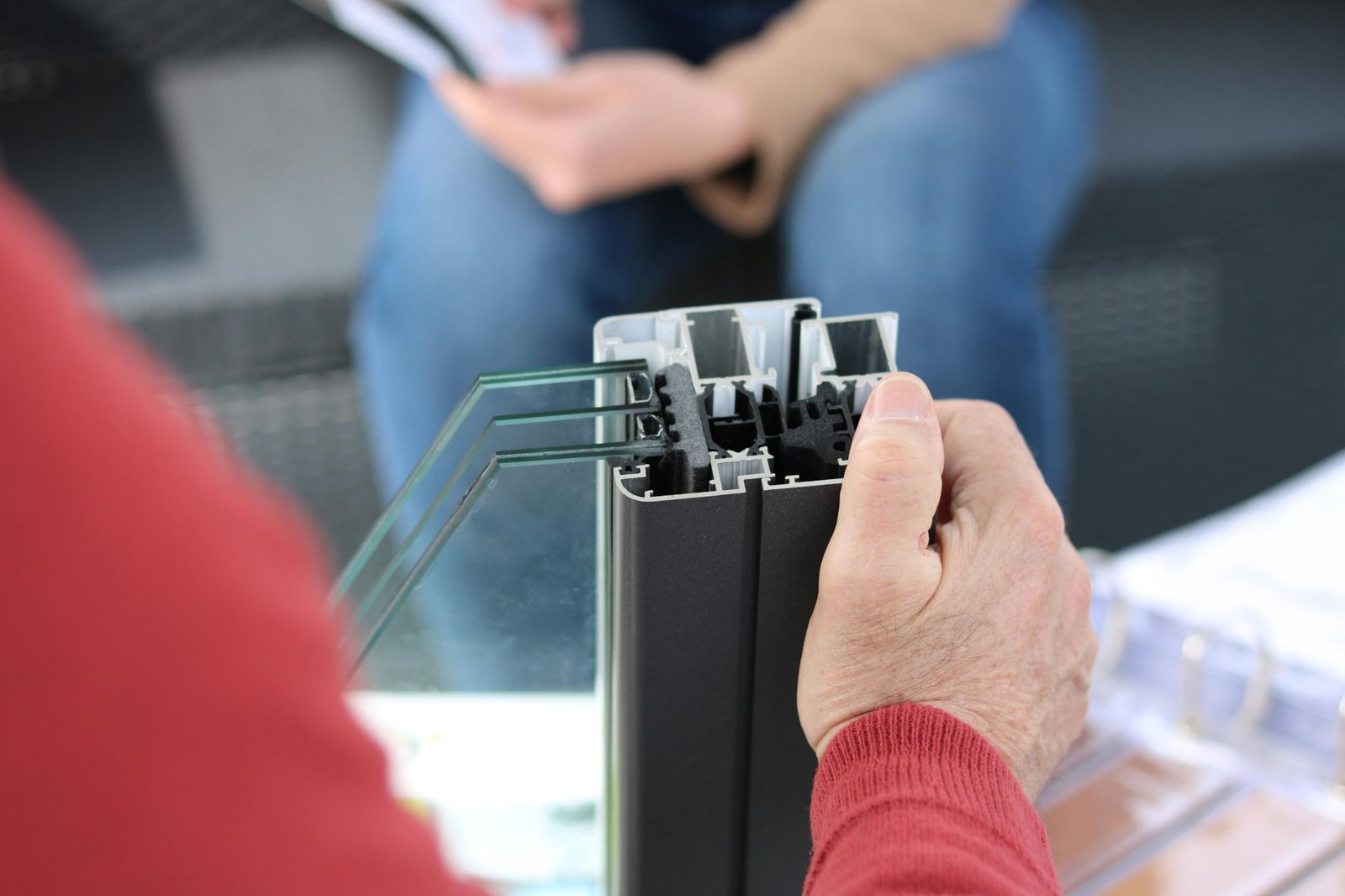
Advancements in material science provide dual benefits of durability and aesthetic appeal for adjustable shade systems. Modern pergola frames are predominantly made from 6063-T5 aluminum alloy, offering an excellent strength-to-weight ratio and corrosion resistance, with a yield strength exceeding 145MPa—yet weighing only one-third that of steel. Surface treatment technologies have also advanced significantly, with multi-layer powder coating providing color fidelity for up to 15 years and enabling unique visual effects, from matte textures to realistic wood-grain replicas and high-reflectivity mirror finishes. A case study from Yongdi Outdoor Design demonstrates that aluminum frames treated with special anodization perform exceptionally in salt spray tests, making them ideal for coastal regions.
The power and control systems serve as the “nervous system” of adjustable pergolas. Modern setups typically use a distributed motor layout, with independent drives for each functional unit, synchronized via CAN bus technology for precision. The control software is learning-capable, memorizing user-preferred settings—e.g., a “breakfast meeting” mode lowers east-side louvers to block morning light, while an “evening party” mode maximizes west-side shade efficiency. Some premium models integrate weather station functions, automatically adjusting shade strategies based on real-time data. For instance, if rainfall probability exceeds 70%, the system closes the canopy and sends a notification to the user’s phone.
Table: Comparison of Mainstream Adjustable Shade System Specifications
| Technical Indicator | Basic Model | Advanced Model | Professional Model | Flagship Model |
|---|---|---|---|---|
| Louver Adjustment Range | 0-90° | 0-135° | 0-150° | 0-165° |
| Control Method | Remote control | App + voice | Smart home integration | AI auto-adjustment |
| Motor Noise | <50dB | <45dB | <40dB | <35dB |
| Waterproof Rating | IP44 | IP55 | IP65 | IP66 |
| Response Speed | 15s/㎡ | 10s/㎡ | 8s/㎡ | 5s/㎡ |
| Additional Features | Basic shade | Integrated lighting | Audio system | Environmental control |
Integrated design is another hallmark of modern adjustable shade systems. Pergolas are no longer standalone elements but are highly integrated with lighting, audio, and climate control systems. LED strips are discreetly embedded in crossbeams, offering adjustable color temperatures from 2700K to 6500K, with some mimicking the dynamic changes of natural light. More advanced systems incorporate misting devices that release micron-level water mist during extreme heat, lowering ambient temperatures by 5-8°C. These integrated features expand the pergola’s usage scenarios and timeframes, transforming it from a daytime shade solution into a core all-weather outdoor living space.
From an engineering perspective, the success of modern adjustable shade pergolas lies in balancing seemingly contradictory demands: lightweight yet robust construction; simple operation yet powerful functionality; advanced technology yet easy maintenance. This balance is achieved through ongoing innovation and meticulous engineering, forming the core value that distinguishes contemporary pergolas from traditional shade structures. As these technologies mature and costs decline, adjustable shade systems are transitioning from high-end residential and commercial projects to mainstream household markets, democratizing outdoor lifestyles.
Design Aesthetics and Customization: Pergolas as Artistic Expressions of Outdoor Spaces
The appeal of contemporary adjustable shade pergolas extends beyond their exceptional functionality to their seamless fusion of technological innovation with artistic design. In modern landscape design and architectural extensions, pergolas have transcended their purely utilitarian role, becoming vehicles for expressing aesthetic ideals and personal taste. This transformation reflects the evolution of outdoor living culture to a higher level—where people seek not just basic shade and rain protection but outdoor art installations that harmonize with overall architectural styles and exude unique character.
Diverse design styles are a standout feature of modern pergola aesthetics. Leading manufacturers like Yongdi offer a range from minimalism to ornamentalism, catering to various architectural contexts and user preferences. For modernist buildings, designers recommend clean lines and geometric forms, drawing inspiration from Scandinavian and Japanese contemporary design languages. These pergolas embody the “less is more” philosophy, using calculated negative spaces and precise proportions to create a light yet powerful visual effect. As one Berlin user remarked about their black aluminum pergola: “It’s like a permanent art installation in the garden, with shadow patterns evolving with the sun’s angle, turning into a living dynamic sculpture.” Conversely, for traditional or vintage settings, designers draw from Art Nouveau or Victorian decorative elements, replicating intricate wrought-iron scrollwork through laser-cut aluminum panels or evoking historical architecture with sculpted beam supports and arches. Such pergolas serve not only as shade but as design bridges between past and present, as a London user noted: “The intricate patterns on my pergola echo the stained glass in my greenhouse, creating a perfect artistic transition.”
Exploration of material expression transforms engineering materials into aesthetic elements. The aluminum alloys used in modern pergolas are no longer mere structural components but canvases for designers. Advanced powder coating techniques deliver stunning artistic effects: matte finishes offer a textile-like warmth; glossy coatings reflect the surroundings, turning pergolas into dynamic light-capturing mediums; and wood-grain transfer technology replicates teak, walnut, or even annual ring details with precision, preserving the visual warmth of wood while avoiding its maintenance challenges. This “material conversion” design philosophy—using modern materials to emulate traditional aesthetics while adding new performance benefits—has become a hallmark of high-end pergola design. In terms of light performance, designers employ innovative materials like prism polycarbonate or etched glass, turning sunlight into an artistic element. A Miami project using photochromic panels that deepen in color under intense sunlight created ever-changing abstract patterns, with a user describing the effect as “bringing Monet’s Water Lilies to my patio.”
Customized design processes ensure each pergola is one-of-a-kind. Facing increasingly discerning consumers, leading manufacturers have established comprehensive customization frameworks. The process typically begins with an in-depth “vision workshop,” where designers use detailed questionnaires to understand users’ lifestyles, aesthetic preferences, and functional needs—ranging from family gathering frequency to descriptive terms like “zen,” “baroque,” or “industrial.” Subsequent site analyses (virtual or on-site) assess architectural facades, landscape features, and sun trajectories to ensure harmony with the existing environment. During the design phase, 3D rendering technology creates realistic scene simulations, showcasing light and shadow interactions across seasons and times of day. Users also receive physical material samples, including frame sections, hardware, and fabric swatches, allowing tactile involvement in decision-making. This end-to-end customization transforms pergolas from standardized products into highly personalized design pieces, reflecting users’ unique lifestyles and cultural identities.
Scenario-based lighting design turns pergolas into nighttime art installations. As outdoor activities extend into the evening, lighting becomes a critical dimension of pergola design. Modern systems offer fully customizable light environments: RGBW LED systems can replicate 16 million colors, with presets ranging from the amber glow of a cozy candlelit dinner to dynamic color shows for summer parties. More sophisticated systems sync with music rhythms or automatically adjust color temperatures by season—warm tones in winter to offset coldness, cool tones in summer for a refreshing feel. Lighting designers cleverly leverage the pergola structure itself, using indirect lighting to make the frame appear “floating” or precise spotlights to highlight selected decorative details. This dual-day-night character—functional shade structure by day, light-and-shadow art installation by night—positions modern pergolas as true all-weather architectural elements.
The artistic trend in pergola design reflects a qualitative shift in the concept of outdoor living. As people increasingly view courtyards and patios as “extra rooms” of their homes, the demand for aesthetic integrity in these spaces rises accordingly. As pergolas serve as the “ceiling” of these outdoor rooms, their design quality directly influences the overall ambiance. As Malucobelle, an outdoor living expert, notes: “Modern pergolas are no longer afterthought practical additions but natural extensions of architectural design, requiring the same meticulous attention to detail as indoor decor.” This shift in design philosophy, combined with ongoing technological innovation and manufacturing precision, has propelled pergolas from garden accessories to outdoor artworks.
Expanded Application Scenarios: Multifunctional Outdoor Solutions from Residential to Commercial
The adoption of adjustable shade pergolas is growing rapidly, with their application scenarios extending far beyond traditional residential courtyards into broader commercial and public spaces. This expansion not only demonstrates the product’s adaptability but also reflects society’s widespread pursuit of high-quality outdoor environments. Through targeted design adjustments across different use cases, pergola systems exhibit remarkable adaptability and transformative impact, redefining how people interact with outdoor spaces.
Residential areas remain the core market for adjustable shade pergolas, but their usage has evolved significantly. Modern residential pergolas are no longer temporary summer shade solutions but central hubs for family outdoor living. Design considerations have become more comprehensive: for homes with eave roofs, designers align pergola angles for visual coherence; in compact urban balconies, slender pergolas with vertical slats provide shade without feeling oppressive; around pool areas, curved-edge pergolas soften the harshness of hard paving while creating a resort-like leisure atmosphere. Functionally, residential pergolas are increasingly integrated with outdoor kitchens, fireplaces, or projection systems, transforming backyards into multifunctional entertainment centers. According to a Malucobelle survey, homes with adjustable shade systems see a 3-5 times increase in outdoor space usage, significantly extending the outdoor activity season even in temperate climates. Notably, pergolas are shifting from “luxury items” to “essential quality-of-life features”—as one residential designer put it: “When planning gardens now, the first question isn’t whether to have a pergola, but which type to choose.”
Hospitality and catering industries are among the most active commercial adopters of adjustable shade technology. Facing fierce competition, restaurants and cafes increasingly rely on outdoor seating areas to create differentiated experiences and boost revenue. Adjustable shade pergolas offer an ideal solution: they adjust microclimates in real-time based on weather conditions while enhancing ambiance through thoughtfully designed lighting and spatial definition. High-end restaurants favor large, customized pergola systems integrating adjustable lighting, infrared heaters, and misting devices to create season-independent dining environments. Chain coffee shops opt for standardized yet stylish shade solutions, maintaining brand consistency while adapting to varying store layouts. Resort hotels push pergola technology to its limits, with some installing fully retractable roof systems over pool areas—open for sunshine on clear days, closed for comfort during rain or intense sun. One hotel manager reported: “Since installing smart adjustable pergolas, our pool bar revenue has increased by 40% because guests can use the area comfortably regardless of weather.”
Retail spaces are leveraging adjustable shade systems to create more appealing shopping environments. From rest areas in open-air malls to outdoor display zones at brand boutiques, pergola technology extends customer dwell time and enhances shopping experiences. A creative innovation is the integration of digital technology with pergola structures—some car showrooms embed transparent LED screens in pergola roofs to regulate sunlight while displaying dynamic product info; fashion brands use photochromic pergolas in waiting areas outside fitting rooms, creating light-and-shadow effects that complement seasonal clothing collections. These innovations indicate that commercial demand for pergolas has shifted from mere shade to comprehensive “brand experience-shaping tools.”
Public and municipal facilities represent an emerging frontier for adjustable shade technology. As urbanization accelerates, the demand for high-quality public spaces grows, and adjustable shade systems offer effective solutions for parks, plazas, and bus stops. Pergolas in children’s play areas integrate UV protection fabrics with a 98% blocking rate to safeguard sensitive skin; those in senior activity zones feature large-font controls and enhanced structural stability for special needs. More complex municipal projects combine pergolas with solar photovoltaic panels, providing shade while generating clean energy. Driven by policies like China’s Urban Green Building Action Plan, these multifunctional public shade facilities are expected to see rapid growth over the next five years.
Specialized applications continue to push the boundaries of adjustable shade technology. In healthcare facilities, pergola systems are imbued with therapeutic functions, using precise light intensity and color temperature to regulate patients’ circadian rhythms; on campuses, anti-glare pergolas create ideal outdoor learning zones; even sports facilities are adopting large-span adjustable shade structures to shield spectator and competition areas from intense sunlight. These diverse applications demonstrate that adjustable shade pergolas have evolved into highly adaptable architectural elements, responding to a range of needs from private to public, practical to therapeutic.
As application scenarios expand, the impact of adjustable shade pergolas on social life deepens. They are not just physical environment regulators but have altered people’s psychological expectations and seasonal patterns for outdoor activities. As an industry observer notes: “High-quality adjustable shade systems blur the line between indoor and outdoor, creating a sense of psychological security—people know they can enjoy outdoor time regardless of weather changes.” This psychological assurance, combined with the achieved comfort levels, explains why adjustable shade pergolas are rapidly becoming essential rather than optional in residential and commercial settings. According to data from the China Research Institute of Industries, by the end of 2023, the penetration rate of shade awnings in China reached 4.3% and continues to grow rapidly, indicating a critical transition from early adopters to the mainstream market.
Market Trends and Future Outlook: Development Directions for Adjustable Shade Pergolas
The adjustable shade pergola industry is in a phase of rapid growth, with technological innovation, evolving consumer demands, and sustainability requirements shaping its future landscape. Analyzing current market dynamics and cutting-edge explorations reveals several key trends. These trends not only forecast the product’s evolution but also reflect broader socioeconomic changes influencing outdoor living styles. From deeper intelligence integration to material science breakthroughs, from innovative business models to installation service enhancements, the pergola industry faces unprecedented opportunities and challenges.
Intelligence and IoT Integration will continue to lead industry innovation. The next generation of adjustable shade systems is moving toward greater autonomous decision-making and deeper networking. A 2024 report by Boyan Consulting predicts that by 2026, over 25% of premium pergolas will feature machine learning-based environmental prediction systems, analyzing local weather forecasts and historical usage patterns to preemptively adjust shade strategies. For instance, if strong afternoon sunlight is forecasted, the system might adjust louver angles in the morning to prevent indoor overheating. More advanced explorations include connecting pergolas to urban IoT systems, enabling responses to grid load demands (adjusting settings to save energy during peak hours) or air pollution indexes (closing to protect indoor air quality). This deep intelligence enhances individual user convenience and positions distributed shade systems as potential collective infrastructure for urban climate regulation.
Sustainable Materials and Low-Carbon Manufacturing are reshaping industry production models. As environmental regulations tighten and consumer eco-awareness grows, pergola manufacturers are accelerating the shift to a circular economy. Two standout innovations include the use of bio-based materials like bamboo fiber composites and plant-derived coatings, which have low carbon footprints and are biodegradable, and the adoption of recycled aluminum alloys and regenerated polyester fabrics, closing the product lifecycle loop. In the future, as product carbon footprint labeling becomes mandatory and green building scores gain weight, sustainability will become a core competitive dimension rather than an added selling point. Policies like China’s Urban Green Building Action Plan are accelerating this shift, mandating green standards for new constructions and indirectly boosting demand for eco-friendly pergolas.
Multifunctional Integration and Modular Design significantly expand the product’s value proposition. Pergolas are evolving from single-function shade structures into comprehensive outdoor solution platforms, integrating an increasing array of features. Recent trends include energy-generating pergolas with transparent photovoltaic films, producing 50-100 watts per square meter daily while providing shade; pergolas with air purification capabilities, using photocatalytic coatings on louvers to break down air pollutants under sunlight; and systems with water collection, channeling rainwater via specially designed roofs to storage tanks for irrigation or cleaning. Meanwhile, modular design allows users to flexibly expand or reconfigure systems based on changing needs—a pergola used for courtyard shade today might become a carport or greenhouse roof tomorrow. This flexibility is particularly appealing to urban users with limited yet dynamic living spaces.
Service-Oriented and Sharing Economy Models introduce new business paradigms. The traditional one-time product sales model is being supplemented by innovative approaches like “Shade-as-a-Service.” Users pay a monthly fee for a complete package including pergola hardware, smart controls, maintenance upgrades, and energy management, avoiding upfront equipment purchases. This lowers the initial investment barrier while ensuring access to the latest technology. In parts of Europe, community-shared pergola systems have emerged, where multiple households book central high-end pergola facilities via an app, similar to shared gyms. Though still nascent in emerging markets like China, this model is expected to grow significantly with urbanization and shifting consumer mindsets among younger generations. According to Zhongyan Network, China’s outdoor shade market output reached 1.11 billion square meters by 2023, providing a solid foundation for service-based business innovations.
Health and Therapeutic Functions are emerging as new battlegrounds for product differentiation. In the post-pandemic era, awareness of the health benefits of outdoor spaces has deepened, leading pergola designs to incorporate wellness-enhancing elements. Features like real-time UV monitoring and protection (especially for children and sensitive skin), smart lighting to regulate circadian rhythms, and active ventilation systems to improve air circulation are gaining traction. The premium market has seen “healing garden” integrated solutions, combining pergolas with aromatic plants, water soundscapes, and meditation spaces to create restorative environments. In the future, as wearable devices become widespread, personal health data could sync with pergola systems in real-time—automatically adjusting light and temperature or releasing soothing scents when stress levels rise.
Region-Specific Adaptations will become more refined. Different climate zones impose varying performance demands on pergolas: tropical regions require enhanced resistance to humidity and hurricanes; desert areas prioritize dust and extreme temperature adaptation; temperate oceanic climates focus on extending the annual usage season. Market segmentation will drive regional product differentiation rather than a one-size-fits-all approach. For instance, pergolas for the Chinese market are being adjusted to local needs—northern regions reinforce dust and snow load designs, while southern areas optimize typhoon resistance and monsoon drainage. This regional trend requires manufacturers to maintain core technological strengths while flexibly meeting localized demands.
Table: Future Development Timeline for Adjustable Shade Pergolas
| Timeframe | Technological Advancement | Market Shift | Policy Impact | User Benefits |
|---|---|---|---|---|
| 2025-2027 | AI environmental prediction | Rise of service models | Strengthened green building standards | Enhanced personalized comfort |
| 2028-2030 | Photovoltaic-shade integration | Spread of community sharing | Mandatory carbon footprint labeling | Energy cost savings |
| 2031-2035 | Bio-intelligent materials | Region-specific customization dominates | Urban heat island mitigation policies | Improved health metrics |
Though China’s pergola industry started later, it has grown rapidly, with a compound annual growth rate of 7.5% from 2015 to 2020, projected to reach approximately 30 billion RMB by 2025. This growth is driven by accelerating urbanization and rising living standards. China’s market is unique: new residential projects often integrate shade facilities during planning for architectural cohesion, while the popularity of e-commerce exposes consumers to the latest global pergola technologies, speeding innovation diffusion. In the future, China’s pergola market is likely to develop a “dual-track” pattern: the high-end segment will pursue fully integrated smart systems, while the mass market will favor cost-effective basic adjustable models.
The future development of adjustable shade pergolas is not just about the product itself but is closely tied to humanity’s broader challenges in addressing climate change. As global warming increases the frequency and intensity of summer heatwaves, passive cooling shade structures will become essential architectural elements rather than luxury options. Research from the United Nations Environment Programme suggests that effective shade design can reduce building cooling energy consumption by 20-40%, positioning pergola technology as a vital component of urban sustainability strategies. From this perspective, the evolution of adjustable shade pergolas represents a recalibration of humanity’s relationship with the natural environment—not retreating into sealed spaces but finding harmonious coexistence through carefully regulated interaction.