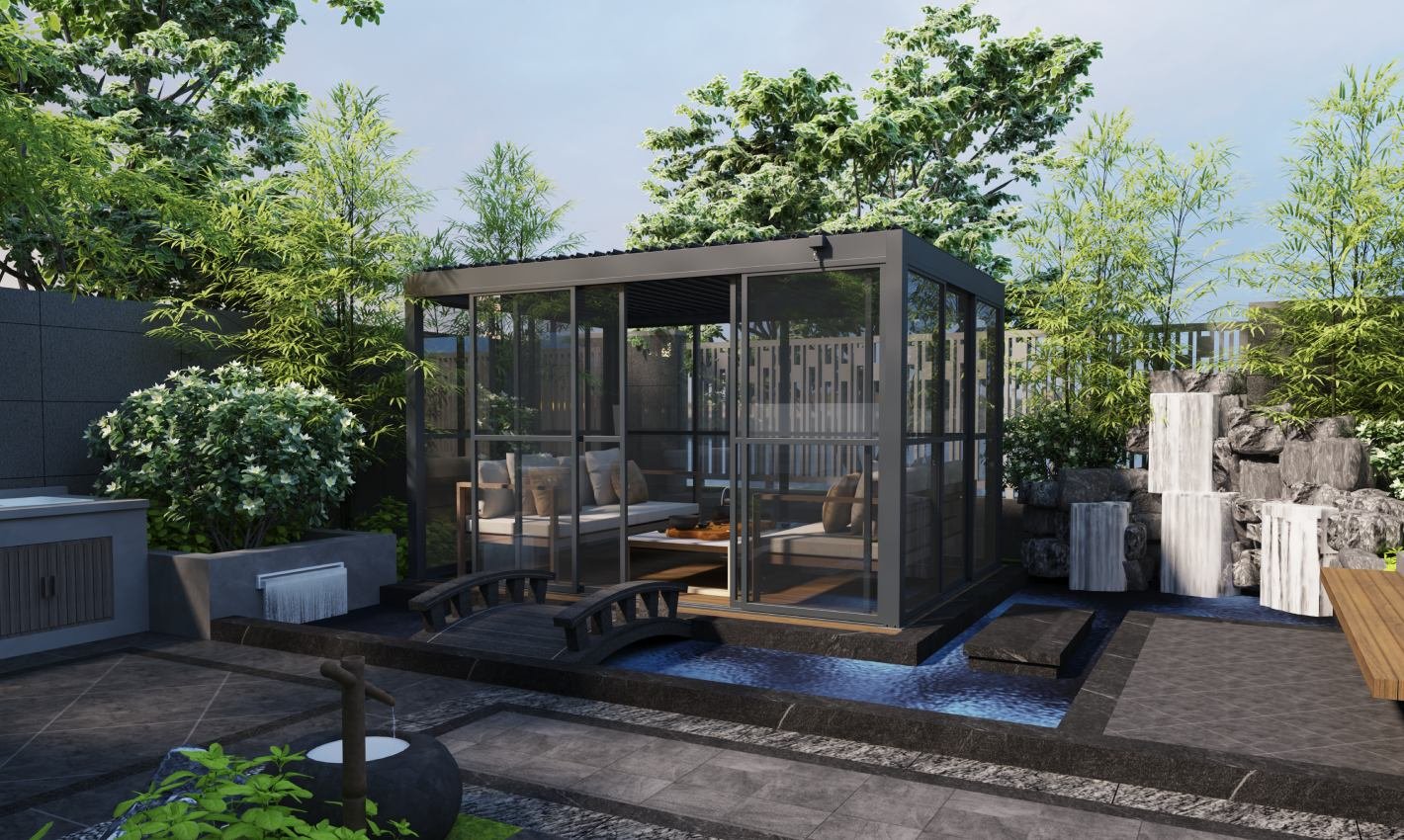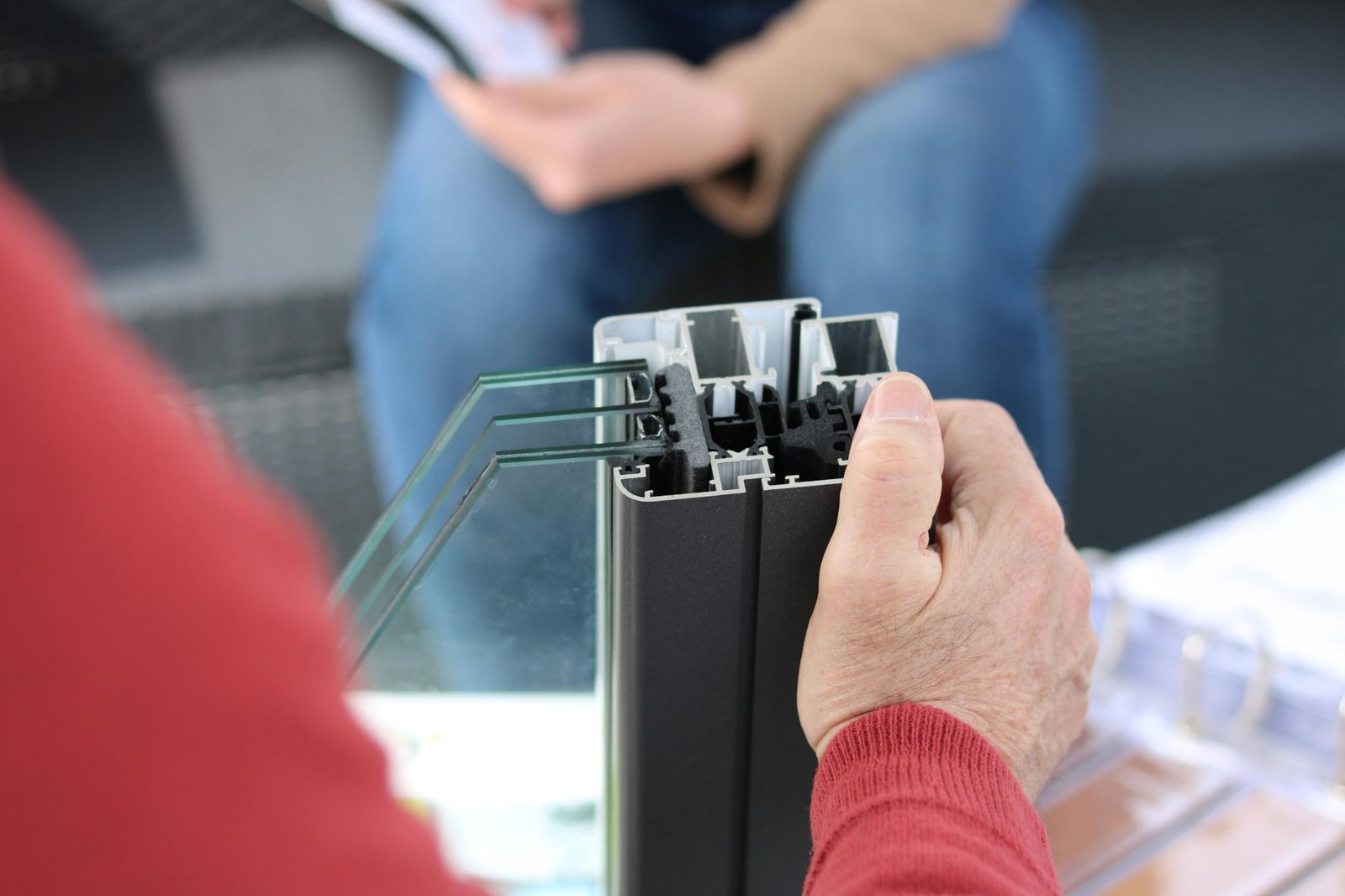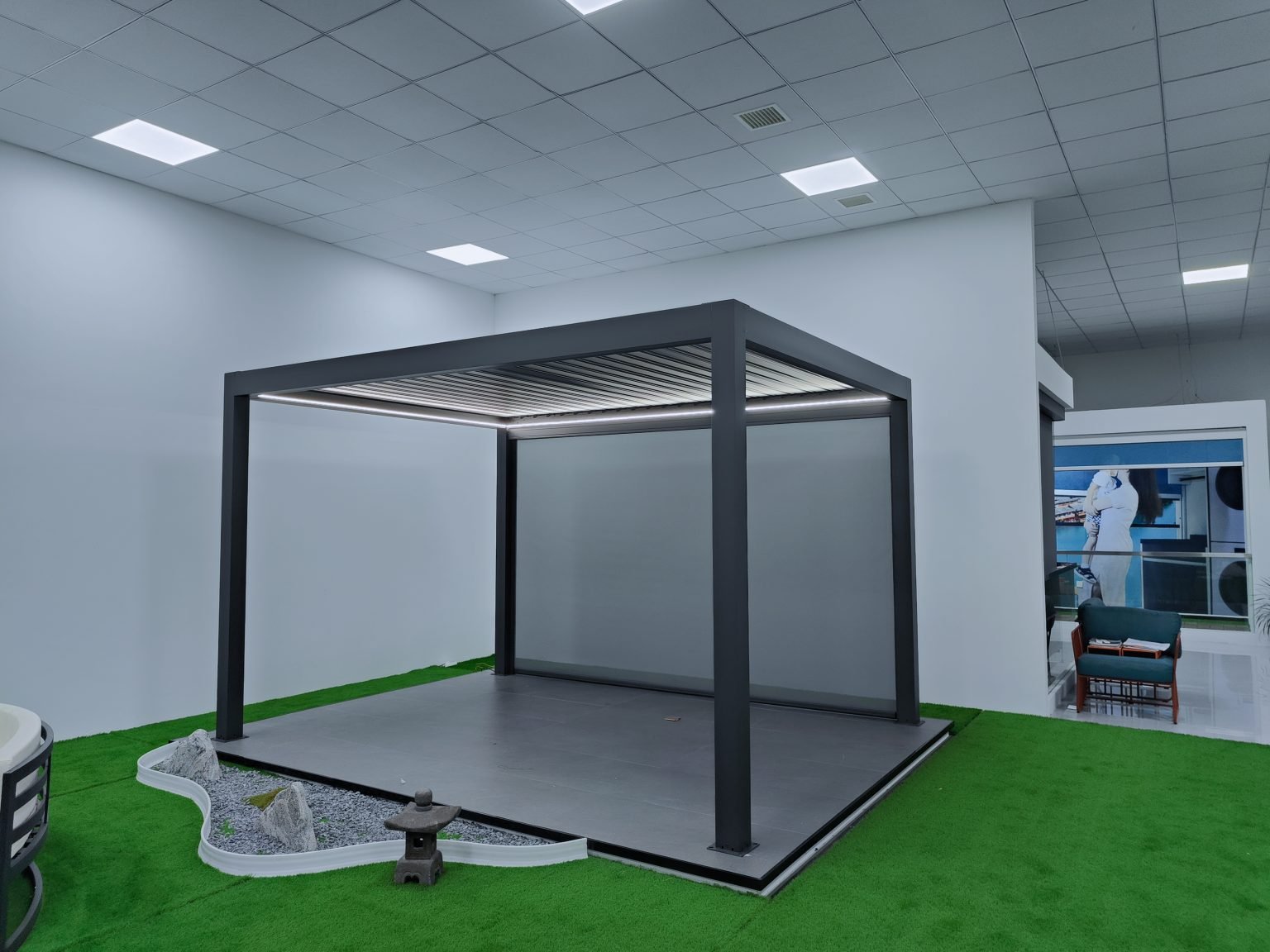
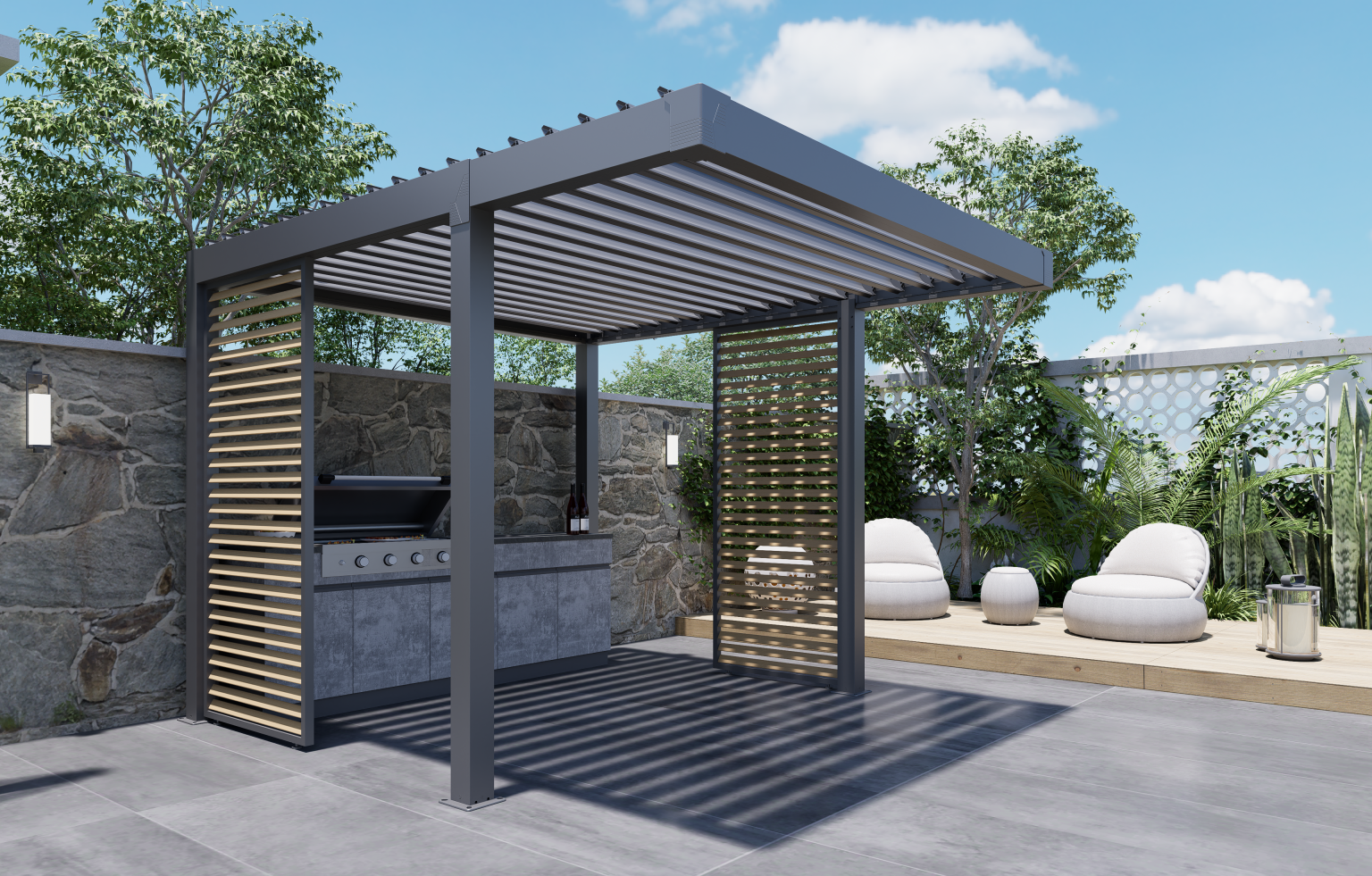
In Europe, pergolas (including bioclimatic models with adjustable louvers) do not have a single dedicated mandatory standard, as they can be classified differently depending on design—e.g., as shading devices (like external awnings), structural kits, or construction products. However, reputable manufacturers typically ensure compliance with relevant European Norms (EN standards) for safety, performance, and free market circulation in the EU/EEA. CE marking is common but not always legally mandatory unless the product falls under specific harmonized EU rules (e.g., Construction Products Regulation or related directives).
Key Standards and Certifications
- EN 13561:2015 (External blinds and awnings — Performance requirements including safety)
This is the most frequently applied standard for pergolas, especially bioclimatic or adjustable-roof types treated as “pergola awnings” or shade systems. It covers safety, durability, and performance, including mandatory wind resistance testing.
Wind resistance classes (tested via simulated loads): - Classes 1–3: Standard for most awnings (up to ~49 km/h or Beaufort 6).
- Classes 4–6: Allowed specifically for guided pergola awnings and similar, enabling higher resistance (some models exceed 100 km/h in closed position).
Other aspects: Resistance to water pocket formation and general safety.
Many manufacturers use this for CE marking of bioclimatic pergolas. - EN 1090-1 (Execution of steel and aluminium structures)
Applies to load-bearing structural components (common in aluminum or steel pergolas). It allows CE marking for structural integrity (often Execution Class EXC2). Frequently combined with Eurocodes for design validation. - Eurocodes (structural design series)
Used for calculating loads: - EN 1990: Basis of structural design.
- EN 1991: Actions on structures (e.g., wind, snow loads).
- EN 1999: Design of aluminium structures.
These ensure pergolas withstand regional environmental forces (e.g., snow in northern Europe). - Other related standards
- EN 13782:2015 — For temporary structures or fabric covers (wind/snow loads).
- Fixed-roof pergolas may reference additional rules for permanence.
CE Marking
Manufacturers often affix CE marking to indicate conformity with applicable standards (e.g., EN 13561 or EN 1090), ensuring safety and market access. It is mandatory only if a harmonized EU rule explicitly requires it (not universally for all pergolas). In practice, it is widespread for quality assurance and often expected by buyers/installers.
Additional Notes
- Wind and snow resistance: Often declared beyond standard classes via independent testing (e.g., up to 120+ km/h wind or significant snow loads).
- National variations: Building permits/installation rules differ by country (e.g., size thresholds in France or UK), but product standards are EU-harmonized.
- Recommendation: For purchases, look for products with documented compliance (Declaration of Performance) from certified manufacturers.
This framework prioritizes safety in diverse European climates while allowing innovation in pergola design.
if you wanna start pergola business in Europe without any worries , choose a professional pergola factory is a best way .