
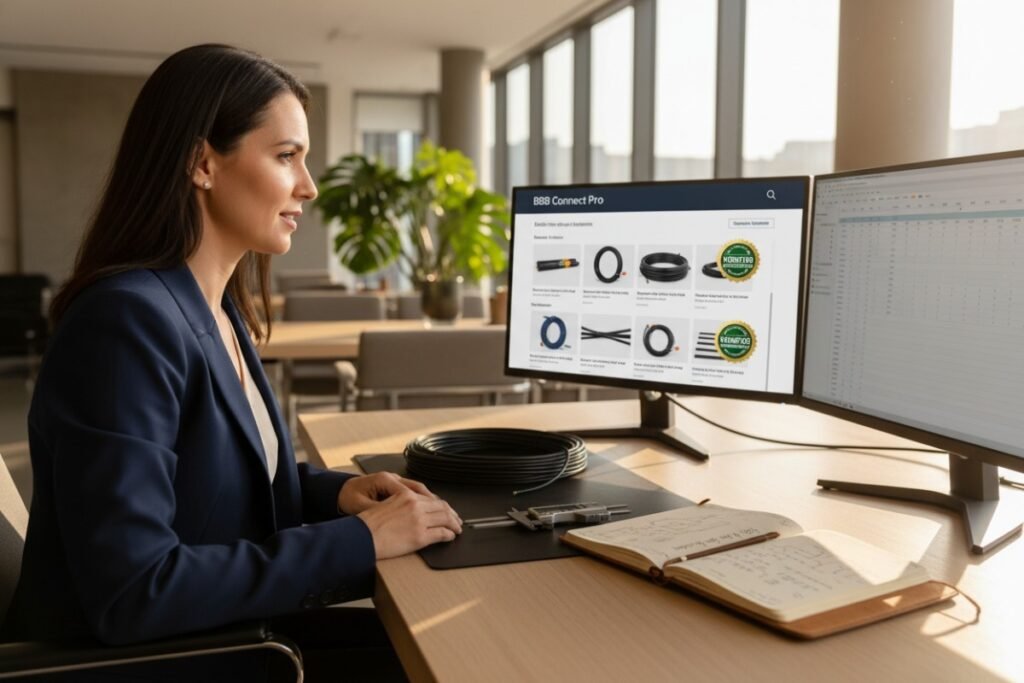
Every week, our sales team gets emails from first-time buyers who feel overwhelmed by the sheer number of fiber optic cable suppliers in China factory audits 1.
Beginners can find suitable fiber optic cable suppliers in China by using B2B platforms like Alibaba and Made-in-China.com to shortlist verified manufacturers, then confirming legitimacy through factory audits, certification checks, sample testing, and direct communication to separate real producers from middlemen.
The process is not as scary as it sounds. But you do need a clear roadmap. In this guide, I will walk you through how to verify suppliers, what certifications matter, how to handle samples, and which red flags to avoid. Let's get into it.
How Do I Verify if a Fiber Optic Cable Supplier in China Is a Legitimate Manufacturer?
Our production facility sits in one of China's major fiber optic manufacturing hubs, so we see firsthand how many traders try to pass themselves off as factories.
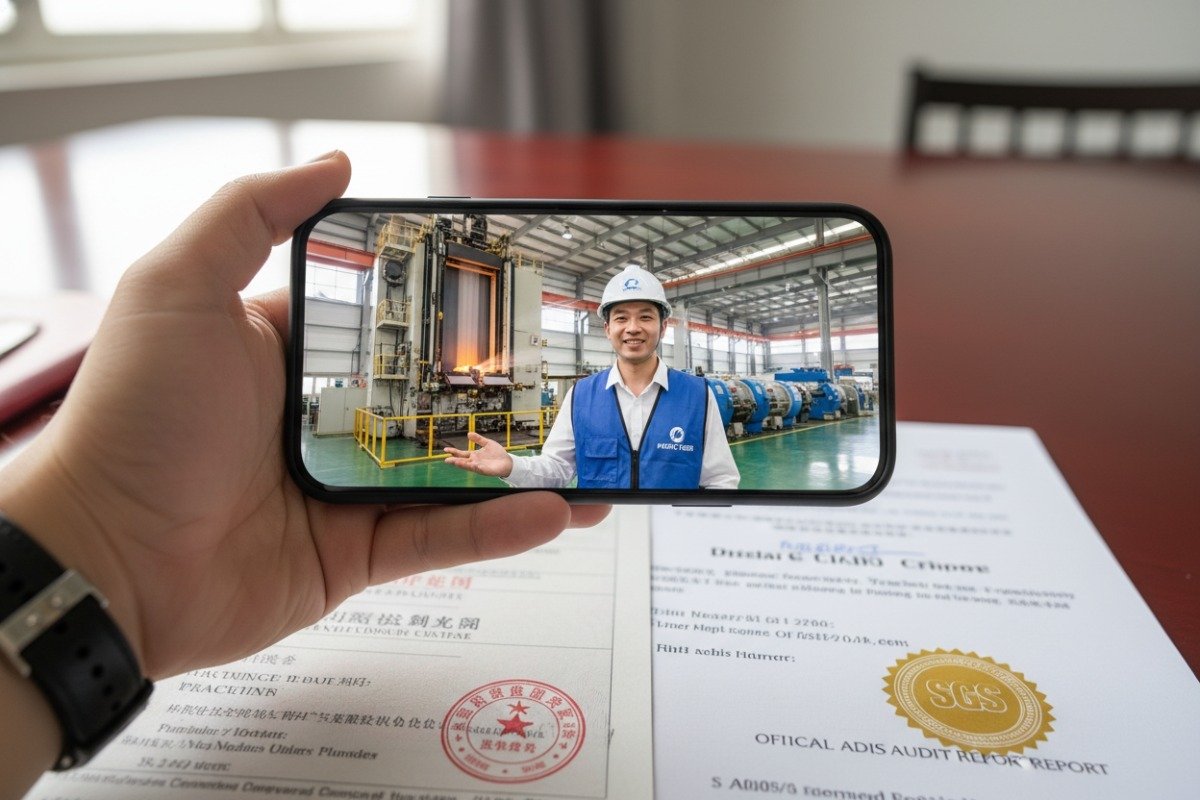
To verify a Chinese fiber optic cable supplier is a real manufacturer, check their business license, request a live factory video tour, confirm production equipment ownership, review export records through customs data, and conduct an on-site or third-party audit through services like SGS or Bureau Veritas.
The biggest challenge for beginners is telling a real factory apart from a trading company. Traders are not always bad. But they add a 10–15% markup, and they have less control over quality. If you want the best price and the most reliable quality, you need to go direct.
Where Are China's Fiber Optic Cable Manufacturing Hubs?
China's fiber optic cable production is concentrated in a few key provinces. Knowing where the real factories are helps you spot fakes quickly.
| Province / Region | Key Cities | Notable Manufacturers | Specialty |
|---|---|---|---|
| Jiangsu | Nanjing, Suzhou | YOFC, Hengtong, ZTT | Full-range fiber & cable, submarine cables |
| Zhejiang | Hangzhou, Ningbo | Futong, Youngsun | FTTH cables, export-focused production |
| Guangdong | Shenzhen, Dongguan | Fibconet, Zion Communication | Indoor cables, patch cords, OEM/ODM |
| Hubei | Wuhan (Optics Valley) | FiberHome | Telecom-grade cables, R&D-heavy |
| Hebei / Tianjin | Tianjin, Langfang | Various mid-tier producers | Cost-effective outdoor cables |
If a supplier claims to be a manufacturer but their registered address is nowhere near these hubs, that is your first clue to dig deeper.
Step-by-Step Verification Process
Here is what I recommend for beginners:
-
Check the business license. Ask the supplier for their Chinese business license 2 (营业执照). Look at the registered scope of business. It should mention "production" or "manufacturing" (生产), not just "sales" (销售).
-
Use B2B platform filters. On Alibaba, filter for "Verified Manufacturer" or "Gold Supplier." On Made-in-China.com, look for audited suppliers. These platforms send third-party teams to confirm factory existence.
-
Request a video call or live factory tour. A real factory will happily show you their production lines. Ask to see the fiber drawing tower, cable stranding machines, and quality testing lab. Traders cannot fake this.
-
Check customs export data. Services like ImportGenius or Panjiva let you search a supplier's export history. If they have been shipping fiber optic cables to your target market for years, that is a strong sign.
-
Hire a third-party auditor. Companies like SGS, Bureau Veritas, or TÜV can visit the factory on your behalf. A basic audit costs $300–$500 and gives you a detailed report on production capacity, equipment, and workforce.
One thing I have learned from years on the production floor: a legitimate manufacturer will never hesitate to show you their facility. If a supplier keeps making excuses to avoid a factory visit or video tour, walk away.
Ask the Right Questions
When you first contact a supplier, ask these questions:
- What is your annual production capacity in fiber-kilometers?
- Can you show me your fiber drawing tower and testing equipment?
- What is your minimum order quantity (MOQ)?
- Have you exported to my country before?
Real manufacturers answer these questions with specific numbers. Traders give vague responses. For example, a factory like Youngsun can tell you they produce 800,000 fiber-km annually. A trader will say "we can handle any order size" without giving details.
Also, check if the factory has experience in your specific market. If you are importing to Europe, ask about CE compliance. If you are in the Middle East, ask about desert-rated cable jackets. A factory that has done business in your region will understand your needs better.
What Specific Certifications Should I Look for to Ensure the Quality of My Fiber Optic Cables?
When we prepare shipments for international buyers, the first thing they ask about is certifications — and for good reason.
Key certifications for fiber optic cables include ISO 9001 for quality management, CE marking for European markets, UL listing for North America, RoHS for hazardous substance compliance, IEC 60794 for cable performance standards, and Telcordia GR-20 for telecom-grade reliability.
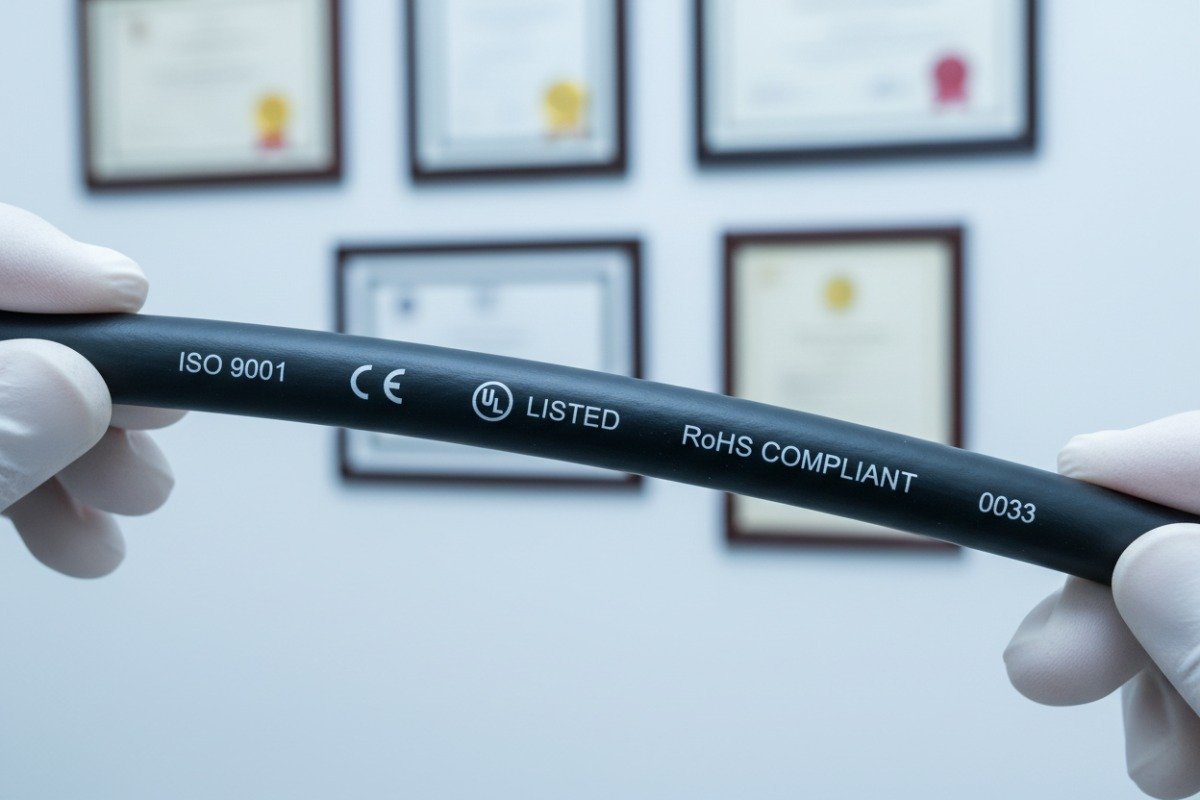
Certifications are not just pieces of paper. They tell you whether a factory follows real quality processes or just talks about quality. Let me break down what each one means and why it matters.
The Must-Have Certifications
| Certification | What It Covers | Why It Matters |
|---|---|---|
| ISO 9001 3 | Quality management system | Proves the factory has documented, repeatable production processes |
| CE Marking 4 | European safety & health standards | Required for selling fiber optic cables in the EU market |
| UL Listing 5 | North American safety standards | Required for cables used in US and Canadian buildings |
| RoHS 6 | Restriction of hazardous substances | Ensures cables are free of lead, mercury, and other toxic materials |
| IEC 60794 7 | Optical cable construction & performance | International standard for mechanical and environmental cable testing |
| Telcordia GR-20 8 | Telecom-grade cable requirements | Used by major telecom operators to qualify cable suppliers |
| CPR (EU) | Construction Products Regulation | Fire safety classification for cables installed in EU buildings |
How to Verify Certifications Are Real
Here is the problem: some suppliers show fake or expired certificates. I have seen it happen. A buyer receives a beautiful PDF of an ISO 9001 certificate, but when they check with the issuing body, it does not exist.
To avoid this:
- Check the certificate number on the issuing body's website. For ISO certificates, you can verify through the IAF CertSearch database.
- Look at the expiration date. Certifications need renewal. An expired certificate means the factory may no longer meet the standard.
- Confirm the scope. An ISO 9001 certificate for "trading of electronic components" is very different from one for "manufacturing of fiber optic cables." Read the fine print.
- Ask for test reports. Beyond system certifications, ask for product-level test reports from accredited labs. These show actual performance data like attenuation 9, tensile strength, and crush resistance.
Match Certifications to Your Market
Different markets need different certifications. If you are importing cables for a data center project in Germany, you need CE and CPR. If you are wiring a building in Texas, you need UL. Do not assume one certification covers everything.
Our engineering team always recommends that buyers send us their project specifications first. That way, we can confirm which standards apply and provide the right documentation upfront. This saves weeks of back-and-forth later.
One more thing: do not chase the cheapest quote at the expense of certifications. A cable that costs 20% less but lacks UL listing cannot legally be installed in a US building. The "savings" become a liability. Quality and compliance always pay for themselves in the long run.
How Can I Request and Evaluate Samples Before Committing to a Large Bulk Order?
In our experience shipping samples to buyers across Europe and the Middle East, we have found that a well-structured sample evaluation saves both sides from costly mistakes down the road.
To evaluate fiber optic cable samples, request 50–100 meter lengths of each cable type, test them against IEC or Telcordia standards for attenuation and mechanical strength, compare specs to the supplier's data sheet, and use an independent lab if you lack in-house testing equipment.
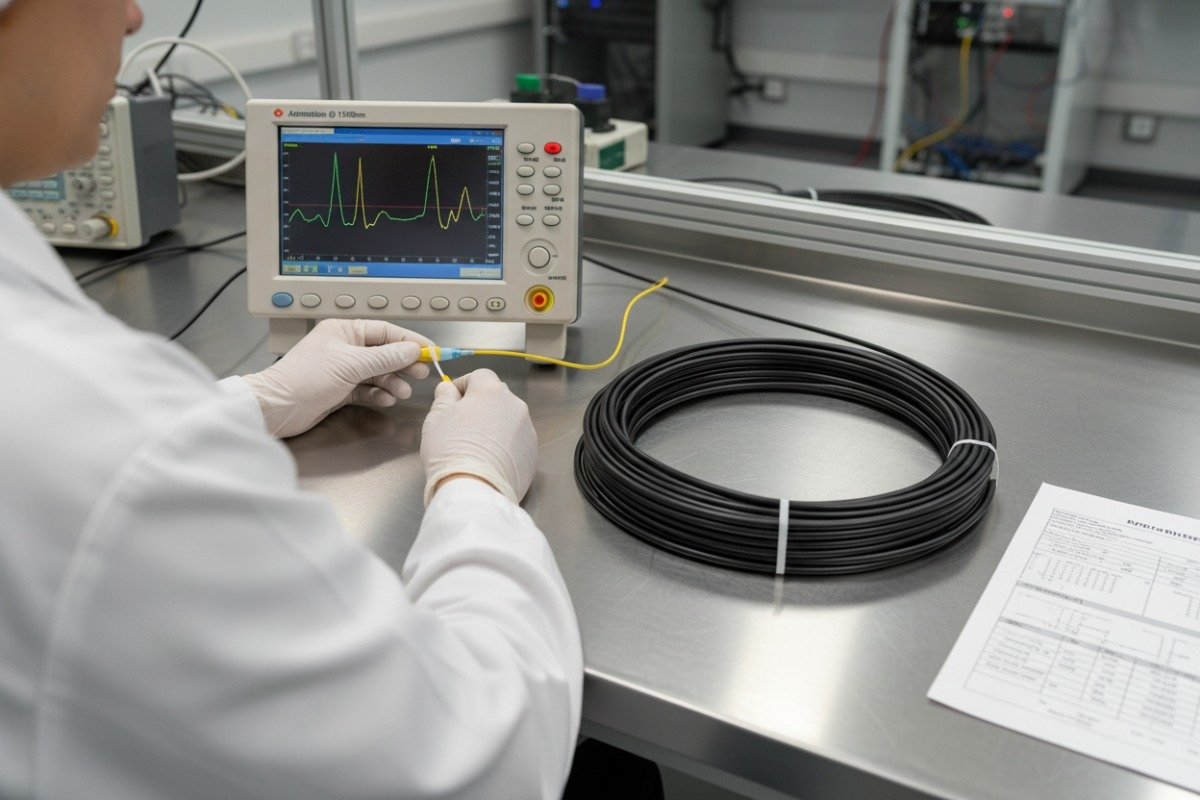
Sampling is your safety net. Never skip it. Even if a supplier has perfect certifications and a beautiful factory, the actual product might not match your expectations. Here is how to do it right.
How to Request Samples
Start by sending the supplier a clear specification sheet. Include:
- Cable type (single-mode, multi-mode, armored, etc.)
- Fiber count
- Jacket material (LSZH, PVC, PE)
- Application (indoor, outdoor, direct burial, aerial)
- Standards the cable must meet
Most Chinese manufacturers offer free samples for standard products. You typically only pay for shipping, which runs $50–$150 via DHL or FedEx for small cable lengths. Custom samples may cost more, but a reputable factory will credit the sample cost toward your first bulk order.
Ask for at least 50 meters. Short samples of 1–2 meters are not enough for proper testing. You need enough length to test attenuation, check print quality, and inspect the cable construction.
What to Test
| Test Parameter | What to Check | Acceptable Range (Single-Mode) |
|---|---|---|
| Attenuation at 1310 nm | Signal loss per km | ≤ 0.36 dB/km |
| Attenuation at 1550 nm | Signal loss per km | ≤ 0.22 dB/km |
| Tensile Strength | Pulling force before damage | Per spec (typically 1000–3000 N) |
| Crush Resistance | Compression force tolerance | Per spec (typically 1000–3000 N/100mm) |
| Jacket Thickness | Physical measurement | Must match data sheet ± tolerance |
| Fiber Color Coding | TIA-598 or IEC 60304 compliance | Colors must match standard |
| Print Marking | Legibility and accuracy | Meter markings, cable type, manufacturer |
Use Third-Party Labs When Needed
If you do not have an OTDR (Optical Time Domain Reflectometer) or tensile testing machine, send the samples to an independent lab. Labs like Intertek, SGS, or even local telecom testing facilities can run a full suite of tests for $200–$500.
Compare every test result against the supplier's data sheet. If the data sheet says attenuation is 0.20 dB/km at 1550 nm but the lab measures 0.25 dB/km, that is a conversation you need to have before placing a bulk order.
Compare Multiple Suppliers Side by Side
I always tell first-time buyers: do not test just one supplier's sample. Request samples from at least three factories. Test them under the same conditions. This gives you a clear comparison of quality, consistency, and value.
Keep detailed records. Take photos of the cable cross-section, jacket quality, and packaging. Note how quickly each supplier responded to your sample request. A factory that takes two weeks to send a simple sample will likely cause delays on a bulk order too.
One practical tip from our shipping team: ask the supplier to include their product catalog, a copy of relevant test reports, and a proforma invoice for the bulk order along with the samples. This way, you can evaluate the full package — product quality, documentation, and pricing — all at once.
Starting small is smart. Many successful long-term partnerships began with a sample order under $500. Scale up only after you are confident in the product and the supplier.
What Are the Red Flags I Should Watch Out for When Communicating With Potential Chinese Suppliers?
Our export team deals with buyer inquiries daily, and we have heard countless stories about suppliers who turned out to be unreliable — stories that could have been avoided with a little vigilance.
Red flags include suppliers who refuse video calls or factory tours, offer prices far below market rate, cannot provide specific production capacity data, show inconsistent product knowledge, pressure you to pay 100% upfront, lack verifiable certifications, and have no proven export history to your target market.

The fiber optic cable market on platforms like Alibaba is crowded. Not every listing is what it seems. Here are the warning signs I have learned to watch for over the years.
Pricing That Seems Too Good to Be True
If one supplier quotes 30–40% below everyone else, something is wrong. They might be using inferior raw materials, thinner jacket walls, or lower-grade fiber. In fiber optics, material quality directly affects signal performance and cable lifespan. A cable that fails in the field costs far more than the money you "saved."
Get quotes from at least five suppliers. Calculate the average. Any quote that falls significantly below that average deserves extra scrutiny.
Communication Warning Signs
Pay close attention to how the supplier communicates:
- Vague answers. If you ask about production capacity and they say "we can meet any order," that is not a real answer. A legitimate factory will say something like "our daily output is 1,500 km of FTTH cable."
- Slow responses. If it takes a week to reply to a simple email, imagine what happens when you have a quality issue mid-shipment.
- No technical knowledge. Ask about fiber specifications, cable construction, or testing methods. A real manufacturer's sales team knows their products inside and out. A trader reads from a catalog.
- Refusing video calls. This is a major red flag. Factories are proud of their production lines. If a supplier will not show you their facility on a video call, they probably do not have one.
Payment and Contract Red Flags
Never agree to 100% payment upfront. The standard in international trade is 30% deposit via T/T (telegraphic transfer) and 70% before shipment, or payment via Letter of Credit (L/C) for large orders. If a supplier insists on full payment before production, walk away.
Also watch for:
- No willingness to sign a sales contract with clear specs, delivery dates, and penalty clauses
- Resistance to third-party inspection before shipment
- Unwillingness to use trade assurance or escrow services on B2B platforms 10
The Trader-Pretending-to-Be-a-Factory Problem
This is the most common trap for beginners. Traders list products on Alibaba with factory photos they found online. They accept your order, then subcontract it to the cheapest factory they can find. You lose control over quality, lead times, and communication.
Here is how to spot them:
- Their product range is suspiciously wide. A real fiber optic cable factory makes cables. They do not also sell LED lights, HDMI adapters, and phone cases.
- They cannot answer detailed technical questions about manufacturing processes.
- Their "factory" address on Google Maps shows an office building, not an industrial zone.
- They have no quality control team or testing lab of their own.
Protect Your Interests
If you are working on a custom or proprietary cable design, use a Non-Disclosure Agreement (NDA) before sharing detailed specifications. Intellectual property protection is a real concern, and a reputable manufacturer will sign an NDA without hesitation.
Also, consider hiring a sourcing agent who specializes in fiber optics if you are placing your first large order. A good agent knows the market, speaks the language, and can visit factories on your behalf. The cost — typically 3–5% of order value — is well worth the peace of mind.
Finally, trust your instincts. If something feels off during communication, it probably is. There are thousands of legitimate fiber optic cable manufacturers in China. You do not need to take risks with a supplier who raises red flags.
Conclusion
Finding the right fiber optic cable supplier in China starts with verification, certifications, sample testing, and vigilant communication — take it step by step, and you will build partnerships that deliver real value.
Footnotes
1. Explains factory audits as a method for assessing supplier quality systems and capabilities. ↩︎
2. Provides context on the importance of a Chinese business license for verification. ↩︎
3. Details the international standard for quality management systems. ↩︎
4. Describes the mandatory conformity mark for products sold in the European Economic Area. ↩︎
5. Clarifies the safety certification for products in North America. ↩︎
6. Explains the EU directive on the restriction of hazardous substances. ↩︎
7. References the International Electrotechnical Commission, which publishes this standard. ↩︎
8. Provides information on the telecom-grade reliability standard for fiber optic cables. ↩︎
9. Defines signal loss in fiber optics, crucial for cable performance. ↩︎
10. Defines B2B marketplaces and their role in business transactions. ↩︎