
For companies sourcing industrial and commercial netting, the real question is not simply whether Chinese-made products are cheaper than local supply. The real question is which sourcing model creates the strongest commercial advantage.
This article examines that decision through a practical cost-benefit lens, comparing Chinese-made netting with local sourcing while focusing on the factors that actually determine business value: landed cost, customization capability, quality control, supply continuity, and long-term margin potential.
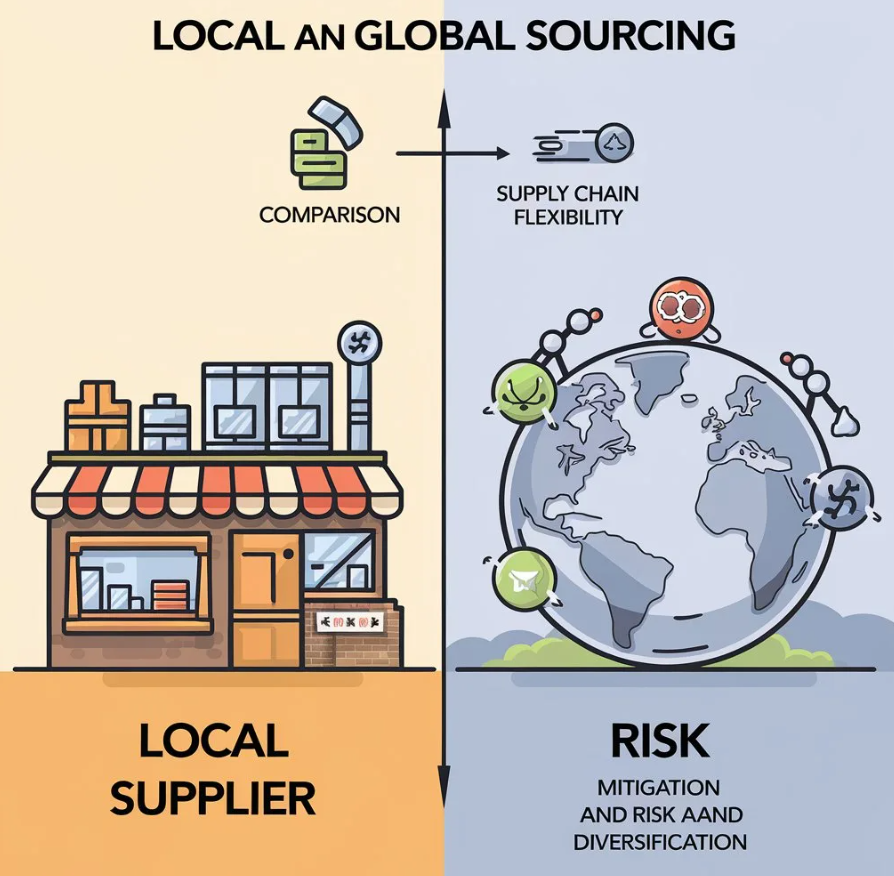
Rather than treating Chinese sourcing as a risk to be tolerated, the smarter approach is to understand why it often delivers the strongest strategic upside when managed correctly. Chinese manufacturers now offer far more than low factory pricing. For many buyers, they provide the combination that matters most in real business: scalable production, broad OEM/ODM flexibility, competitive material sourcing, and the ability to build a product that fits the market instead of settling for what happens to be available locally.
This article also addresses the concerns buyers hear most often—quality assurance, lead time, tariffs, communication, and supply chain risk—but frames them realistically. These are not reasons to avoid China. They are variables to manage. When handled well, they do not eliminate China’s advantage. In many cases, they still leave China as the more profitable and strategically useful sourcing option.
Key Takeaways
- Calculate total landed cost, but recognize that Chinese sourcing often remains the stronger value even after freight, tariffs, and handling are included.
- Use independent quality control and clear specifications to turn overseas sourcing into a controlled process rather than a gamble.
- Leverage China’s OEM/ODM depth to build differentiated products and protect margin instead of competing only on standard local stock.
- Plan inventory around longer lead times, because lower unit cost and higher customization flexibility often justify the extra planning.
- A strong Chinese supplier relationship is not just a purchasing channel; it can become a long-term competitive asset.
- For many netting buyers, the most profitable choice is not the nearest supplier, but the supplier that offers the best mix of cost, scalability, and product control.
Looking Beyond the Sticker Price
For many buyers, the decision between sourcing netting from China and buying from a local supplier appears simple at first glance. One quote comes in lower, another comes in higher, and the discussion starts and ends with unit price.
That is exactly where many companies make the wrong decision.

A sourcing decision should never be reduced to a surface-level price comparison, especially in an industry like netting where material quality, mesh specification, UV treatment, dimensions, packaging, and application-specific performance all directly affect commercial outcomes. The cheapest visible number is not always the best buying decision. But just as importantly, the higher local price is not automatically the safer or smarter one.
The real objective is not to find the lowest headline quote. The real objective is to find the sourcing model that produces the best business result.
For many importers, distributors, project contractors, and private-label sellers, that answer increasingly points toward China—not because of outdated assumptions about “cheap labor,” but because Chinese sourcing often provides a stronger overall value structure: lower build cost, wider customization scope, deeper production capacity, and better room to protect profit.
A serious procurement strategy therefore requires a shift in mindset. Instead of asking, Who gave me the fastest quote? or Who is closest to my warehouse? the better question is:
Which supply model gives me the most usable advantage in cost, product control, and margin over time?

That is the question this analysis is designed to answer.
1. Deconstructing the Total Cost of Ownership
One of the biggest mistakes buyers make is focusing too heavily on the factory quote while ignoring the rest of the cost structure. At the same time, many buyers overcorrect in the other direction and assume that once freight, tariffs, and logistics are added, China somehow loses its advantage.
In real procurement, neither shortcut is useful.
The correct method is to calculate total cost of ownership—but to do so honestly. And when that is done properly, Chinese sourcing still often comes out ahead, especially for buyers who care about scale, customization, and resale margin.
The Attraction of the Factory Price Is Not the Problem
A low EXW quote from China is not misleading by itself. It becomes misleading only when the buyer does not understand what it excludes.
If a Chinese manufacturer quotes a large order of agricultural bird netting, baseball backstop netting, cargo netting, or construction safety netting at a price far below a domestic supplier, that lower number should not be dismissed. It usually reflects a real structural advantage: China’s manufacturing ecosystem is built to produce at lower cost.
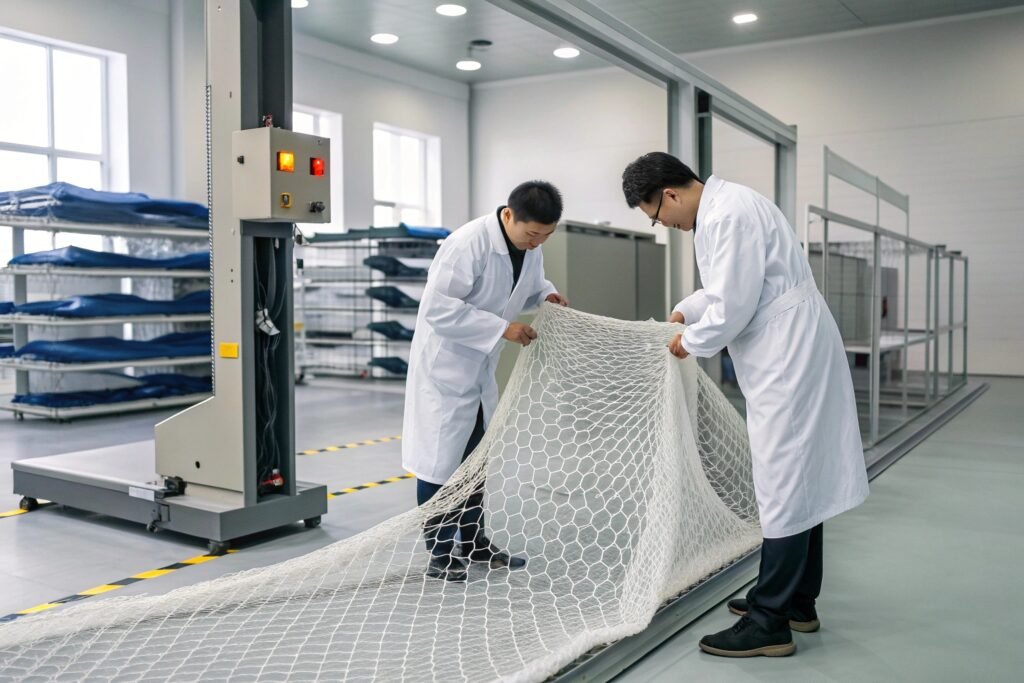
That advantage usually comes from factors such as:
- larger-scale raw material purchasing
- denser industrial supply chains
- specialized netting machinery and labor concentration
- lower conversion cost for OEM production
- more flexible factory configuration for custom orders
In other words, the lower quote is not just a random number. It usually reflects real production economics.
The mistake is not that buyers notice the lower price. The mistake is stopping the analysis too early.
Landed Cost Still Matters—But It Often Still Favors China
To evaluate a Chinese quote properly, the buyer needs to convert the EXW or FOB price into landed cost.
That means including the additional expenses required to bring the goods to the buyer’s facility, such as:
- ocean freight
- cargo insurance
- tariffs and duties
- customs clearance
- brokerage fees
- inland transport from the port
This is where many sourcing discussions become more realistic. But it is also where buyers often fall into another bad assumption: they see added logistics cost and immediately conclude that China is no longer worth it.
That conclusion is often wrong.
In many netting categories, the production cost gap between China and local supply is large enough that even after freight and duty are added, China still produces a materially better landed cost.
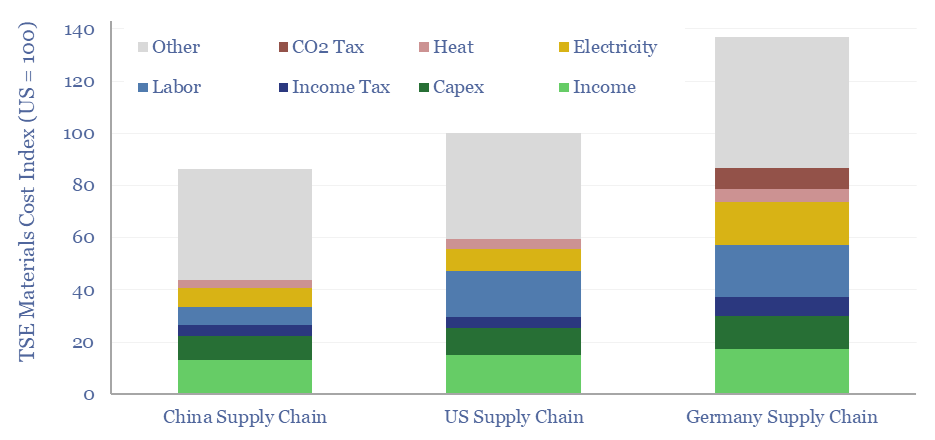
And even when the gap narrows, the China option may still deliver better value once customization, private labeling, or order flexibility are considered.
Example: Why Lower Factory Cost Still Matters
| Cost Component | Chinese Supplier (Hypothetical) | Local Supplier (Hypothetical) |
|---|---|---|
| Initial Product Quote | $30,000 | $50,000 |
| Ocean Freight & Insurance | $4,500 | $0 |
| Tariffs & Duties | $4,500 | $0 |
| Customs Brokerage & Port Fees | $1,000 | $0 |
| Inland Transportation | $800 | $1,200 |
| Total Landed Cost | $40,800 | $51,200 |
Yes, the original price gap narrowed after the full landed-cost calculation. But the Chinese option still came out ahead by more than $10,000.
That is not a minor saving. That is usable margin, price flexibility, or additional budget that can be deployed elsewhere in the business.
For a distributor, that difference may protect resale margin in a competitive market. For a contractor, it may help win a project without sacrificing profit. For a private-label brand, it may create room for better packaging, stronger marketing, or more aggressive customer acquisition.
This is why landed cost analysis should not be used as an argument against China. It should be used to understand how much of China’s cost advantage remains after the full logistics picture is included.
In many cases, the answer is: enough to matter a great deal.
Hidden Costs Matter—But So Does Hidden Opportunity
A full sourcing analysis should also include less obvious factors, including:
- exchange-rate movement
- wire transfer fees
- deposit-based payment terms
- inventory carrying cost
- inspection cost
These are real and should not be ignored.
But buyers should also recognize the hidden opportunity on the Chinese side.
For example:
- a lower ex-factory cost may justify carrying slightly more stock
- a lower unit cost may allow a company to enter a market it could not profitably serve with local sourcing
- a factory that supports OEM changes may allow the buyer to offer a differentiated SKU instead of competing on generic supply
That means the sourcing decision should not be framed as China equals hidden costs, local equals simplicity. That framing is too shallow.
A more accurate framing is this:
- China often brings more complexity
- but it also often creates more commercial upside

—China boasts the world’s most spectacular drone shows; however, experiencing them requires advance planning—you cannot get a firsthand experience simply by sitting at home.
For a serious buyer, complexity is not automatically a disadvantage. If managed well, it is simply the cost of accessing a more powerful supply model.
2. Quality, Compliance, and the Real Source of Product Reliability
One of the most persistent objections to buying from China is the old assumption that lower price must mean lower quality.
That idea is outdated.
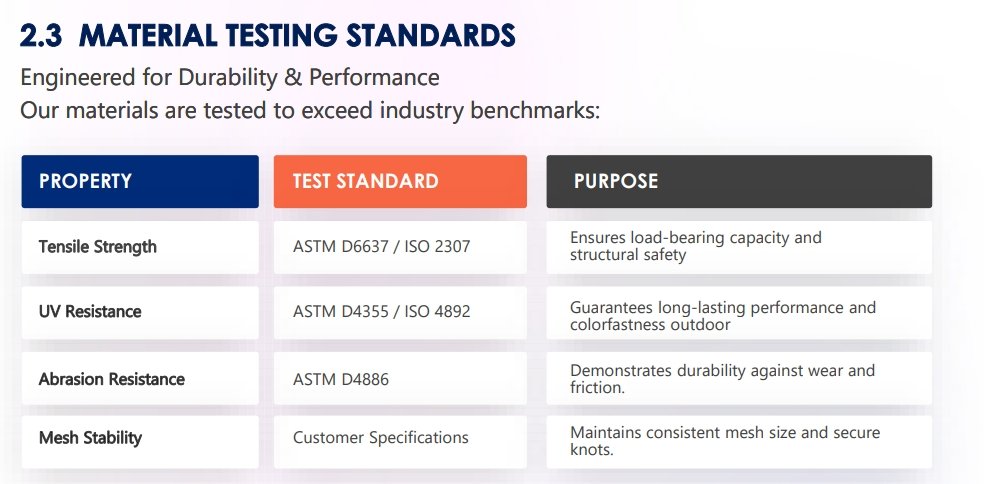
Quality today is not determined by country of origin in any simple way. It is determined by specification, process control, supplier selection, and inspection discipline. China manufactures poor products when buyers ask for poor products—or leave specifications vague enough that the factory fills in the blanks with the cheapest acceptable option. But China also manufactures premium-grade, export-quality, highly customized industrial products every day for global brands that demand consistency and performance.
That distinction matters.
The real question is not whether China can make high-quality netting. The real question is whether the buyer is sourcing in a way that makes high quality likely and verifiable.
China’s Quality Range Is an Advantage, Not a Weakness
Many buyers talk about quality variation in China as if it is purely a problem. In reality, it is also one of China’s greatest commercial strengths.
China’s manufacturing base covers a wide spectrum, from commodity-level production to premium, high-spec OEM work. That means buyers are not trapped in one quality band. They can match the product to their business model.
For example:
- a wholesale buyer serving a price-sensitive agricultural market may want a lower-cost HDPE net with standard UV treatment
- a sports facility contractor may need heavier twine, tighter tolerances, reinforced borders, and documented performance
- a brand owner may want a custom combination of material, color, packaging, and labeling to create a more defensible market position
China can support all three.

That flexibility is commercially valuable. It gives buyers more control over how they balance cost, performance, and resale strategy. A local supplier often offers less real choice than buyers assume. In many cases, the local supplier is simply importing a narrower product range, adding margin, and selling convenience.
Direct sourcing from China gives the buyer access much closer to the actual point where product decisions are made.
Quality Does Not Start in the Factory. It Starts in the Specification
The biggest reason import buyers end up disappointed is not always factory dishonesty. Often, it is buyer ambiguity.
If a purchase order says “strong UV-resistant netting” without defining:
- material grade
- UV inhibitor level
- tensile target
- mesh tolerance
- twine diameter
- edge reinforcement
- packaging requirement
- acceptable defect rate
then the factory is left to interpret the request. And factories usually interpret vague specifications through the lens of cost efficiency.
That is not uniquely Chinese. It is simply how manufacturing works.
The commercial lesson is straightforward: if you want China to deliver strong value, you must source with discipline.
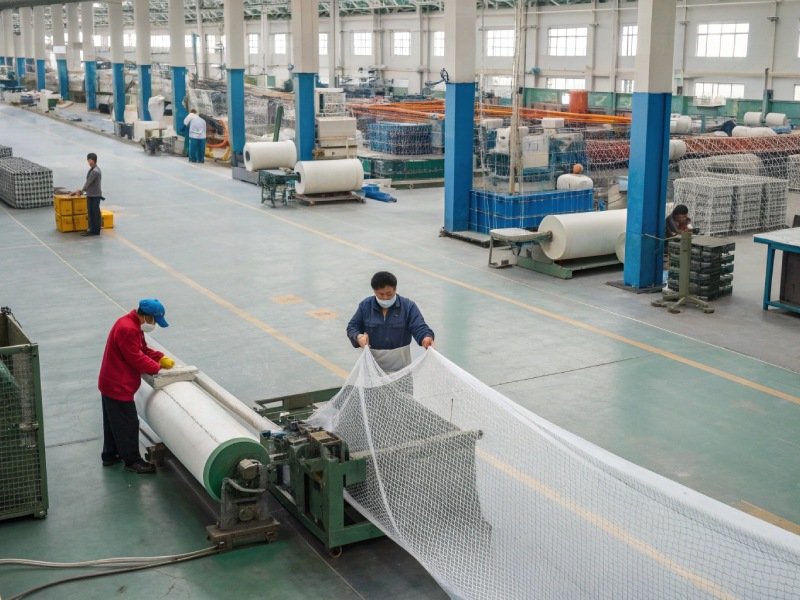
That means using:
- detailed technical specifications
- approved samples
- signed production requirements
- clear acceptance standards
Once this is done, Chinese sourcing becomes much less speculative and much more controlled.
Third-Party QC Is Not a Burden. It Is a Competitive Tool
Some buyers treat third-party inspection as an inconvenience or an added cost. That is the wrong mindset.
For overseas sourcing, QC is one of the tools that converts China’s cost advantage into reliable business value.
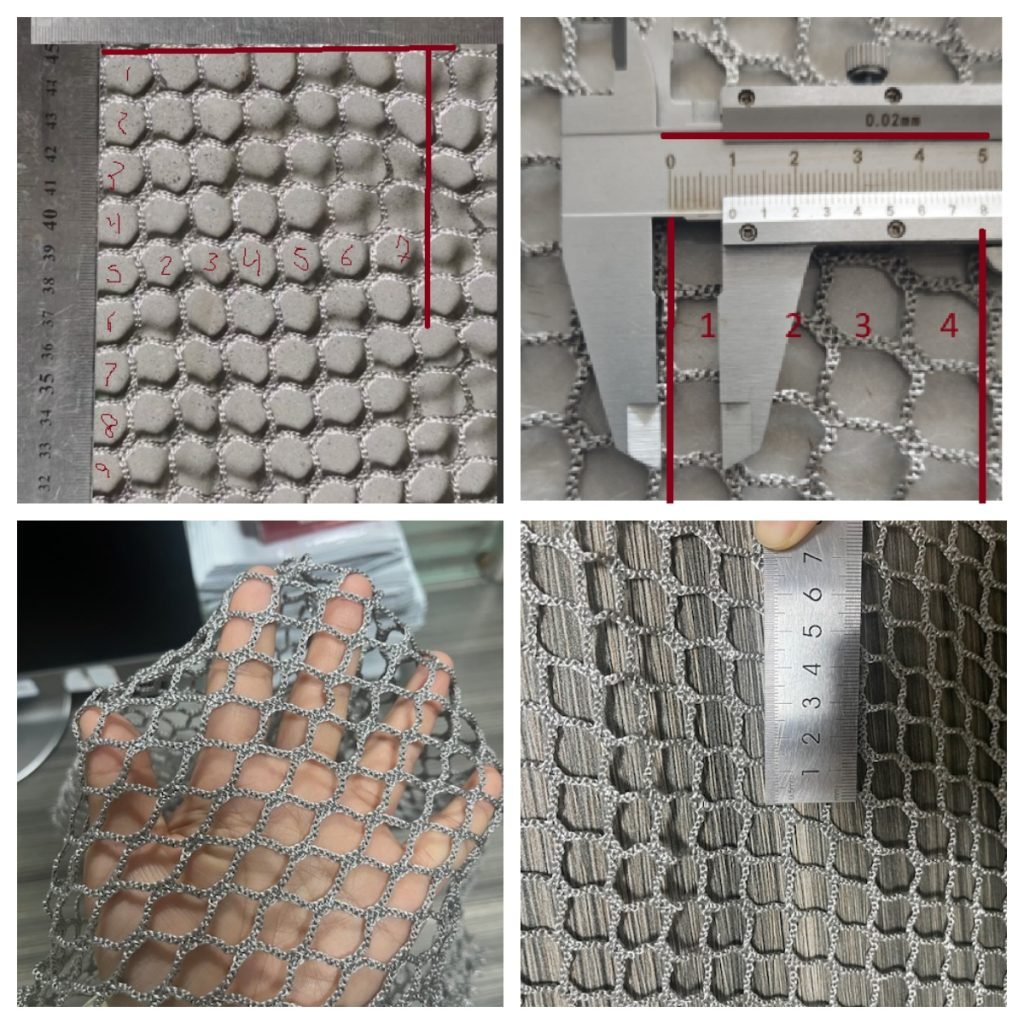
A buyer using a professional inspection program can verify:
- raw material consistency
- mesh size accuracy
- twine thickness
- workmanship
- packaging compliance
- shipment readiness
before the balance payment is released.
That changes the entire sourcing equation. Instead of relying on hope, the buyer builds a system. And once that system is in place, the risk profile of Chinese sourcing improves dramatically.
More importantly, a disciplined buyer can often achieve a better cost-quality combination from China than from a local supplier, because they are buying closer to production while still controlling output quality through process.
Want Better Cost Without Giving Up Quality?
Our team can help you review mesh size, material, UV treatment, strength requirements, packaging, and OEM options before production starts.
Request a quote for your custom netting project and we will help you compare product configuration, landed cost, and factory options.
3. Customization and Product Control — Where China Creates Real Margin
In competitive netting markets, most companies are not losing business because they cannot find a supplier. They lose business because they are selling the same product as everyone else.
This is where sourcing strategy becomes a growth decision, not just a purchasing decision.
Why Standard Products Limit Your Business
Local suppliers typically operate on a stocking model:
- limited SKUs
- fixed specifications
- minimal variation
- fast delivery
This works well for urgent demand. But it also creates a ceiling.
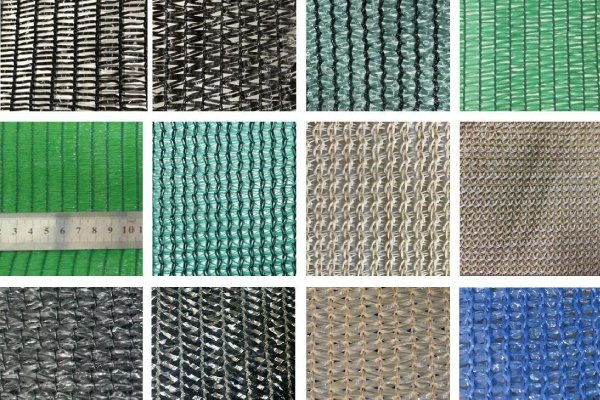
If you are buying the same mesh size, material, twine thickness, and dimensions as every other buyer in your region, then your only real lever becomes price. And competing only on price is not a strong long-term strategy.
China Gives You Product-Level Control
Chinese OEM/ODM manufacturing changes that dynamic completely.
Instead of choosing from what already exists, you can define what should exist.
You can control:
- material selection (HDPE, polyester, nylon, blends)
- UV package level based on climate
- mesh size tuned to specific applications
- twine diameter based on strength requirements
- edge reinforcement for different load conditions
- color and visibility requirements
- packaging and branding
That level of control directly affects profitability.
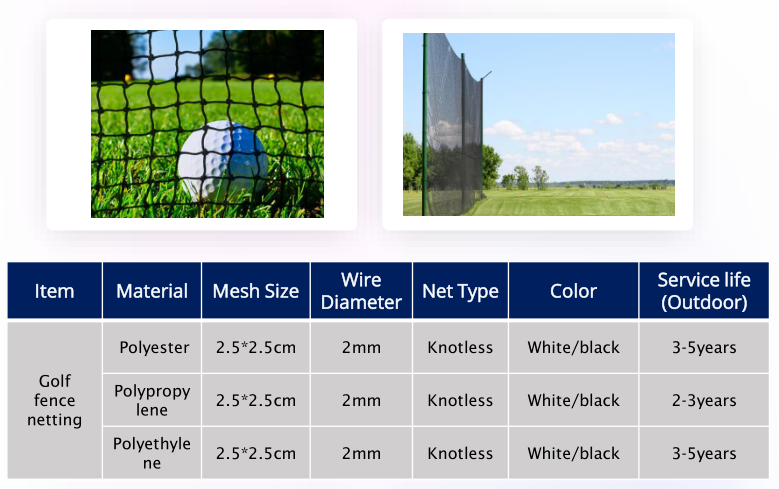
Because once your product is no longer generic, you are harder to compare, harder to replace, and less exposed to pure price competition.
OEM Is Not Just Manufacturing — It’s Positioning
For many buyers, OEM is misunderstood as “just customization.” In reality, it is a market positioning tool.
If you are a distributor, contractor, or brand owner, your supplier helps determine how unique your offering can be.
Working with a capable Chinese manufacturer allows you to:
- build private-label netting lines
- tailor products for specific industries such as sports, agriculture, construction, or cargo
- create bundles or systems instead of single SKUs
- differentiate on performance, not just price
This is where real margin is created—not from saving $1 per unit, but from selling something competitors cannot easily replicate.
Local Suppliers: Fast, But Limited in Scope
Local suppliers still have value, especially for:
- small urgent orders
- last-minute project needs
- simple, standardized products
But their ability to support deep customization is usually limited by:
- smaller scale
- narrower material sourcing
- less specialized machinery
- lower willingness to deviate from standard SKUs
In many cases, the “local option” is not actually more flexible. It is simply more immediate.
For buyers who want to grow—not just maintain—China offers something local sourcing rarely can: the ability to shape product strategy, not just fulfill it.
For related reading, add internal links such as custom netting solutions, OEM/ODM netting manufacturer, and sports netting manufacturer.
4. Supply Chain Reality — Lead Time Is a Trade-Off, Not a Dealbreaker
The most common concern after cost and quality is lead time. And yes, China is usually slower than local supply. But speed alone does not determine the best sourcing decision.
Understanding the Real Lead Time Structure
A typical China order includes:
- production: 2–8 weeks
- ocean shipping: 4–6 weeks
- customs and delivery: 1–2 weeks
Total: 8–14 weeks
Local supply may reduce that to roughly 2–4 weeks. At first glance, this looks like a major disadvantage for China. But in real operations, that difference is often a planning issue rather than a strategic limitation.
Why Longer Lead Time Is Often Acceptable
Most netting buyers are not ordering randomly. They operate with:
- seasonal demand cycles
- project timelines
- repeat SKUs
- forecastable consumption
Once demand becomes predictable, lead time becomes something to manage, not something to fear. And in exchange for that planning requirement, China provides lower cost, higher customization, and larger batch efficiency.
Inventory Is a Cost — But Also a Tool
Yes, sourcing from China often requires carrying more inventory. That ties up capital. But it also creates advantages:
- stable supply for your customers
- ability to fulfill large orders quickly
- reduced reliance on local stock availability
- stronger negotiating position with your own buyers
The real comparison is not simply China equals slow and local equals fast. It is more accurate to say:
- China = planned supply with stronger margin potential
- Local = reactive supply with a higher cost ceiling
Risk Is Real — But It Is Manageable
Global sourcing does introduce risk:
- tariffs
- port delays
- geopolitical change
- logistics disruption
But these are not reasons to avoid China. They are variables to manage.
Experienced importers reduce risk through:
- multi-supplier strategy
- buffer inventory
- forward planning
- stable freight partnerships
- clear contracts
Once these systems are in place, the supply chain becomes far more predictable. And when that happens, China’s cost advantage becomes much more meaningful.
For related reading, add internal links such as how to import netting from China and netting supply chain guide.
5. Communication and Service — From Transaction to Partnership
Many buyers assume that sourcing from overseas automatically means poor communication. That depends entirely on the supplier.
Communication Is a Supplier Selection Issue
A professional Chinese export-oriented manufacturer will typically provide:
- English-speaking sales engineers
- structured quotation processes
- technical documentation
- production updates
- QC reporting
The real issue is not geography. It is whether you choose a trading middleman or a serious factory with export experience.
Yes, There Are Frictions — But They Are Predictable
Working with China involves:
- time zone differences
- slower response cycles
- occasional language nuance issues
But these are manageable once expectations are set. In exchange, you gain access to production-level decision making, deeper technical support on customization, and direct influence over manufacturing.
The Real Difference Shows in Problem Handling
The biggest concern buyers have is simple: what happens if something goes wrong?
With local suppliers, returns may be easier and resolution may be faster. With China, returns are usually impractical, which is exactly why pre-shipment control matters so much.
Strong buyers do not rely on fixing problems after shipment. They design systems to prevent problems before shipment. That includes:
- pre-shipment inspection
- clear specifications
- approved samples
- staged payments
When this is done correctly, the risk gap narrows significantly.
Long-Term Supplier Relationships Matter More in China
With Chinese sourcing, the supplier relationship often becomes more strategic over time. A good factory will:
- learn your product standards
- understand your market
- improve consistency across orders
- suggest cost or performance improvements
At that point, the supplier is no longer just a vendor. They become part of your competitive structure.
Frequently Asked Questions
Isn’t it always risky to buy nets from China?
Not if the sourcing process is structured properly. The real risk usually comes from vague specifications, weak supplier selection, and poor inspection discipline—not from China itself. With clear technical requirements, approved samples, and third-party QC, Chinese sourcing becomes far more controlled and predictable.
Does China still make sense after tariffs and freight?
In many cases, yes. Buyers should calculate full landed cost instead of relying on factory price alone. But even after freight, tariffs, and import handling are included, Chinese sourcing often still offers a meaningful cost advantage—especially for larger orders or custom products.
What kind of netting can be customized?
Nearly every major variable can be customized, including material, mesh size, twine diameter, color, dimensions, packaging, UV treatment, fire-retardant treatment, and branding. This is one of the biggest advantages of working directly with a capable Chinese OEM/ODM netting manufacturer.
How can I improve quality control when buying from China?
Start with detailed specifications, approved samples, and written quality standards. Then use third-party inspection at the right stage of production. This combination gives buyers real control over output quality before final payment and shipment.
Is local sourcing still better for small urgent orders?
Often, yes. Local supply can still be the better choice for very small-batch, one-off, or urgent orders where speed matters more than margin. But for repeatable B2B purchasing, scalable private label programs, or larger project supply, China often provides stronger long-term value.
Conclusion
The decision between Chinese-made netting and local supply is not really a choice between cheap and safe. That is an outdated way to think about modern sourcing.
The more accurate comparison is this:
- China offers stronger product control, higher margin potential, deeper customization, and more scalable production—but requires better planning and process discipline.
- Local supply offers lower complexity and faster turnaround—but usually with a higher cost ceiling and less room for product differentiation.
For businesses that are scaling volume, building product lines, competing on margin, serving B2B clients, or developing private-label programs, China is often not just a viable option. It is the more powerful business model.
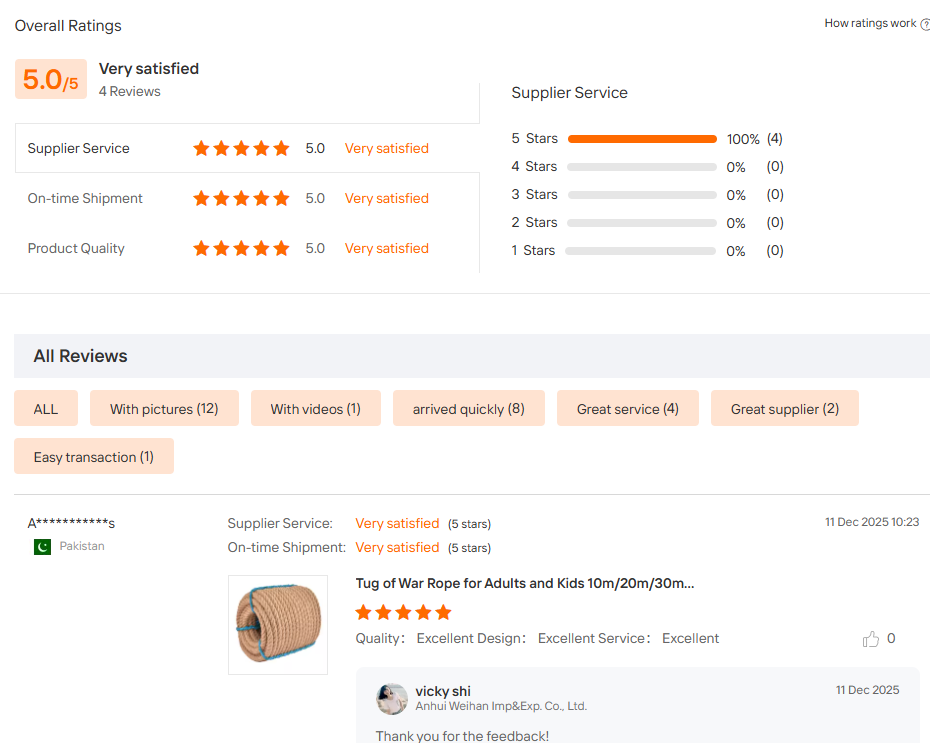
The companies that succeed with Chinese sourcing do one thing differently: they stop treating it as a simple purchase and start treating it as a system.
They define specifications clearly. They implement QC processes. They plan inventory. They build supplier relationships.
Once that system is in place, China is no longer “risky.” It becomes:
- predictable
- scalable
- profitable
If your goal is the lowest effort, the fastest delivery, or the least planning, then local sourcing may still fit better. But if your goal is stronger margin, product differentiation, long-term growth, and more control over what you sell, then the answer in many cases is clear:
China is not just an option. It is an advantage.

Read our most popular articles.
👉 Download our free product categories
👉 5 Reasons Why Durable, Long-Lasting Products are the New Definition of “Cost-Effective”
👉 The Essential 7-Point Checklist for Ordering Custom Made Cargo Nets in 2026
👉 The 2026 Chinese Manufacturing vs. Local Suppliers: A Netting Buyer’s Guide
👉 7 Proven Advantages of Sourcing Directly from a Factory
👉 How to Start a Private Label Netting Business: A 5-Step Framework for Work
👉 A Practical 5-Point Checklist for Choosing Custom Netting Solutions